

Most inventors don’t fail because their ideas are bad. They fail because they can’t find the right support at the right time. Whether you’re sketching your first prototype or preparing a patent application, working from a solid inventor community resources checklist saves you months of trial and error. This article maps out every category of resource you need, from local inventor support groups and free legal help to prototyping tools and funding pathways, so you can move forward with confidence instead of guessing.
Table of Contents
-
1. Your inventor community resources checklist: what to include and why
-
2. Local inventor support groups and networking opportunities
-
4. Prototyping, market validation, and business guidance resources
Key Takeaways
| Point | Details |
|---|---|
| Use a structured checklist | A checklist for inventors prevents missed resources and keeps your process organized by stage. |
| Match resources to your stage | Early-stage inventors benefit most from local groups; patent filing requires formal legal channels. |
| Free legal help exists | USPTO pro bono programs and law school clinics offer patent assistance at no cost. |
| Community accelerates progress | Inventor support groups provide peer feedback, pitching practice, and real-world connections. |
| AI tools reduce cost barriers | Platforms like Inventifystudios let you prototype and draft patents without expensive consultants. |
1. Your inventor community resources checklist: what to include and why
Before you start collecting resources, you need a framework for evaluating them. Not every inventor support group or online forum will serve your specific needs. Applying a consistent set of criteria helps you cut through the noise fast.
Here’s what to assess for each resource you consider:
-
Cost and accessibility: Is it free, low-cost, or subscription-based? Can you attend remotely or only in person?
-
Expertise level: Does it serve beginners, advanced inventors, or both? Is the focus general entrepreneurship or IP-specific?
-
Type of support: Technical help (prototyping, engineering), legal guidance (patents, trademarks), marketing, or funding?
-
Community engagement: Does it include peer networking, mentorship, or just one-way information delivery?
-
Format and frequency: Weekly webinars, monthly in-person meetings, or on-demand content?
-
Reputation: Is the organization verified, affiliated with a university or government body, or peer-reviewed?
Pro Tip: Start your checklist with three columns: Resource Name, Stage It Serves (ideation, prototyping, patent, market), and Cost. This forces you to think strategically rather than bookmarking everything and using nothing.
Using stage-appropriate resources improves outcomes significantly. Informal local groups work best for early feedback. Formal legal channels are the right fit for patent filings. Mixing them up leads to generic advice when you need precise guidance most.
2. Local inventor support groups and networking opportunities
Local inventor communities are underused. Most first-time inventors don’t realize that structured, recurring groups exist in many cities, offering everything from informal feedback sessions to organized pitching opportunities.
The Inventors Council of Dayton meets on the first Wednesday of each month and includes an online Google Group for ongoing discussion among inventors, IP professionals, and marketers. That mix matters. When your peers include patent attorneys and product marketers, you get feedback that goes beyond “great idea.”
The Inventor’s Association of Metropolitan Detroit educates inventors at all experience levels and arranges informal pitching opportunities through direct contact with the organization’s president. Meetings run both in-person and online, making it accessible regardless of location.
Here’s how to find groups near you:
-
Search “[your city] inventor association” or “[your state] inventor council”
-
Check university library patent resource pages, which often list regional inventor groups
-
Look for Meetup.com groups focused on product development or entrepreneurship
-
Contact your local Small Business Development Center (SBDC) for referrals
Showing up consistently matters more than showing up perfectly. Inventors who attend community inventor meetings regularly report early detection of real-world issues that solo inventors miss entirely.
3. Free and low-cost legal resources for patent help
Patent costs stop a lot of inventors cold. A full utility patent application with an attorney can run $10,000 or more. But free and low-cost options exist, and most inventors don’t know about them.
The USPTO runs two critical programs worth knowing:
-
Patent Pro Bono Program: Matches under-resourced inventors with volunteer patent attorneys and agents at no charge.
-
Pro Se Assistance Program: Provides direct support to inventors filing patents without an attorney.
The USPTO’s Patent Pro Bono Program also connects inventors with Patent and Trademark Resource Centers (PTRCs) located in public libraries and universities nationwide. These centers offer free database access and trained staff who can help you conduct prior art searches.
Law school clinics are another underused option. Many accredited law schools run IP clinics where supervised students handle real patent work for qualifying inventors. Search “[your state] law school patent clinic” to find programs near you.
The MdVLA Pro Bono Patent Program connects under-resourced inventors in Maryland with volunteer patent attorneys, with applicants contacted within 10 business days of review. The program serves solo inventors, nonprofits, and small businesses in the arts. Similar programs exist in other states under different names.
Pro Tip: Apply to pro bono programs early. Screening and response times can take weeks, and you cannot afford to wait if you’re approaching a patent deadline.
One deadline you cannot miss: the 12-month provisional patent window. A provisional patent gives you “patent pending” status, but it expires after exactly 12 months with no extension. Missing that deadline means losing your priority date permanently, which opens the door for prior art to undermine your patentability.
Also, a weak provisional application creates real problems later. Poor descriptions in provisionals leave protection gaps that affect your claims when you file the non-provisional. Get legal help before you file, not after.
4. Prototyping, market validation, and business guidance resources
Getting your idea to market requires more than a patent. You need a working prototype, evidence of market demand, and a business plan that holds up to scrutiny. The good news is that free resources exist for each of these.
-
LAUNCH Point at Dayton Metro Library: Offers free business workshops and networking specifically designed to help entrepreneurs advance toward product launch. Many public libraries now offer similar programs.
-
Small Business Development Centers (SBDCs): Federally funded centers in every state provide free one-on-one business advising, market research tools, and financial planning support.
-
SCORE: SCORE mentors are certified volunteers, many of them retired executives, who meet with inventors and startups at no charge. Dayton SCORE, for example, offers both workshops and individual mentor sessions.
-
Online inventor communities: Forums and groups on platforms like Reddit (r/inventors), LinkedIn inventor groups, and dedicated invention platforms connect you with peers who have already solved problems you’re facing.
-
Inventifystudios.com: The platform’s AI prototype generator lets you create 3D prototype visuals in minutes, assess patentability, and generate provisional patent drafts without hiring a consultant.
| Resource | Cost | Best For | Format |
|---|---|---|---|
| SBDC | Free | Business planning, market research | In-person or virtual |
| SCORE | Free | Mentorship, startup strategy | In-person or virtual |
| LAUNCH Point / Library | Free | Workshops, networking | In-person |
| USPTO PTRC | Free | Patent searches, legal guidance | In-person or online |
| Inventifystudios.com | Subscription | Prototyping, patent drafts, validation | Online platform |
5. Funding opportunities and how to find them
Funding is where most inventors stall. They assume they need venture capital, but that’s rarely the right first step for an early-stage invention.
Start with grants. The Small Business Innovation Research (SBIR) program and Small Business Technology Transfer (STTR) program offer federal grants to inventors and small businesses developing technology with commercial potential. These are non-dilutive, meaning you don’t give up equity.
Crowdfunding platforms like Kickstarter and Indiegogo serve a dual purpose. They raise money and validate market demand at the same time. A successful crowdfunding campaign is proof that real people will pay for your product, which matters enormously when approaching investors or licensing partners later.
Angel investor networks and local startup accelerators are worth exploring once you have a working prototype and some validation data. Your SBDC advisor can often make direct introductions to regional funding networks. The Inventifystudios Knowledge Center also covers funding pathways specific to inventors at different stages.
6. Comparing and tracking your inventor resources
Once you’ve identified your options, you need a way to track and prioritize them. This comparison gives you a quick reference across resource types.
| Resource Type | Cost | Focus Area | Inventor Stage |
|---|---|---|---|
| Local inventor councils | Free | Networking, peer feedback | Ideation, early development |
| USPTO pro bono programs | Free | Patent filing, legal guidance | Patent stage |
| Law school IP clinics | Free | Patent applications | Patent stage |
| SBDCs and SCORE | Free | Business planning, mentorship | All stages |
| Library programs (LAUNCH Point) | Free | Workshops, product launch prep | Development, pre-launch |
| AI invention platforms | Low-cost | Prototyping, patent drafts | Ideation through patent |
Use this checklist to track your engagement:
-
Joined at least one local or online inventor support group
-
Attended a PTRC or library workshop on patent searching
-
Applied to a USPTO pro bono or law school IP clinic program
-
Scheduled a free SBDC or SCORE advisor meeting
-
Created a prototype or validated your concept with a target market
-
Filed or prepared a provisional patent application
-
Identified at least one funding pathway (grant, crowdfunding, or investor network)
My take on what actually moves the needle
I’ve watched a lot of inventors collect resources without using them. They join three groups, bookmark every article, and still feel stuck six months later. The issue isn’t access. It’s sequencing.
In my experience, the inventors who make real progress use local groups and online communities first, specifically to stress-test their idea before spending a dollar on legal help. Peer feedback from a group like the Inventors Council of Dayton will surface problems your friends and family won’t mention. That feedback shapes a stronger invention and a cleaner patent application.
Then they move to formal channels. Pro bono programs, law school clinics, and PTRCs become relevant once you have a clear invention to protect. Approaching them too early wastes everyone’s time.
The other pitfall I see constantly: treating the provisional patent as a placeholder. Inventors rush it, leave out key details, and discover the gaps only when they’re filing the non-provisional. A well-drafted provisional is the foundation of your entire IP strategy. Spend real time on it, or use a tool that helps you draft it properly from the start.
Community support is not a replacement for legal and technical expertise. It’s the environment that helps you figure out which expertise you need and when.
— Hua
How Inventifystudios.com helps you act on this checklist
Reading a checklist is one thing. Having the tools to execute it is another.
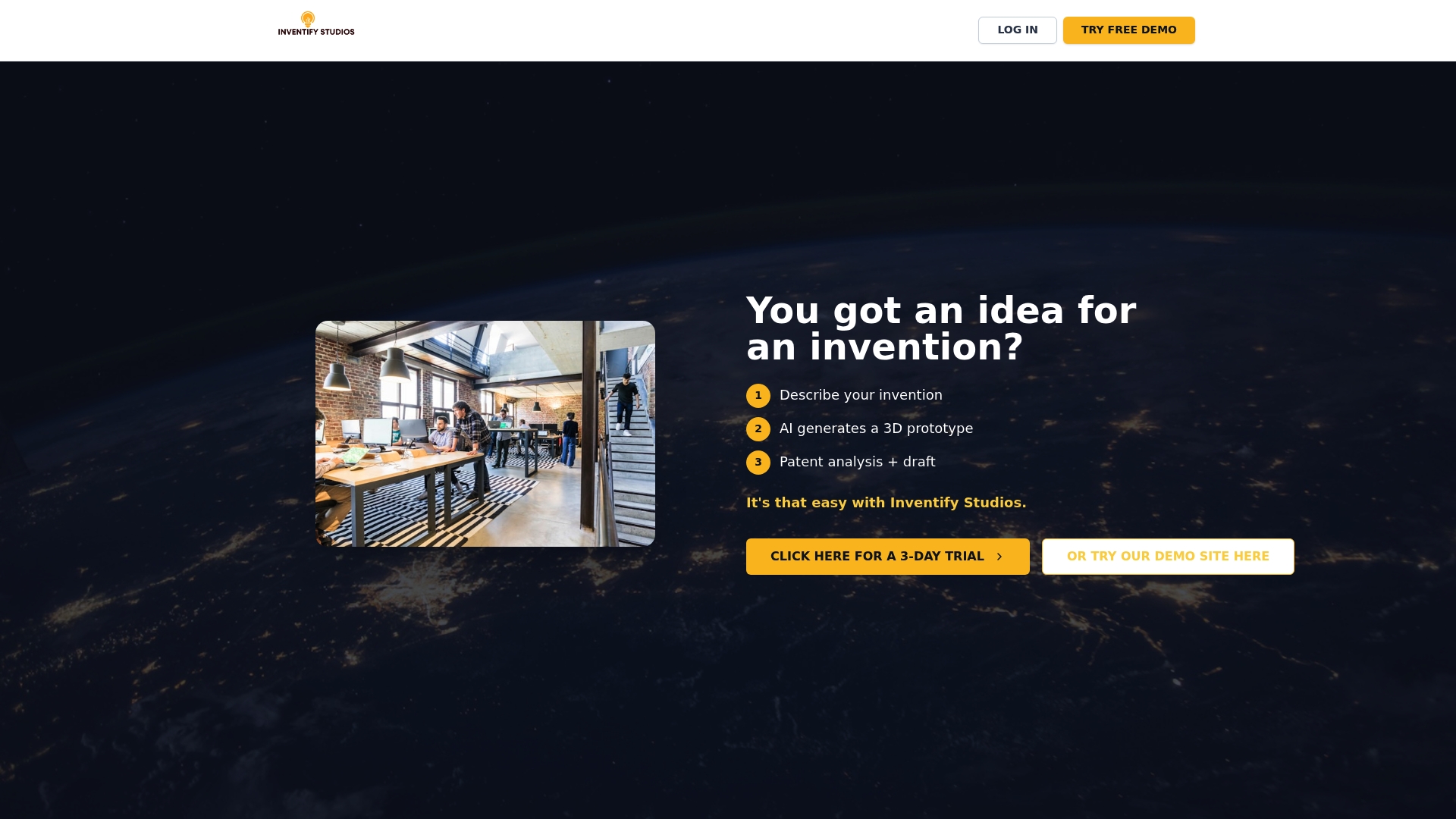
Inventifystudios.com is built specifically for inventors who want to move fast without cutting corners. The platform’s Create Invention tool walks you through idea validation, AI-generated 3D prototypes, patentability analysis, and provisional patent drafting, all in one place. You don’t need a $400-per-hour consultant to get patent-ready. You need the right platform and a clear process.
Where community resources give you feedback and connections, Inventifystudios.com gives you the technical output: a prototype you can show, a patent draft you can file, and a marketability report you can act on. Explore inventor invention details to see exactly how the platform supports each stage of your invention process. The checklist tells you where to go. Inventifystudios helps you get there.
FAQ
What should an inventor community resources checklist include?
A solid checklist for inventors covers local support groups, free legal and patent assistance programs, prototyping resources, business mentorship options, and funding pathways. Organize it by invention stage so you know which resources to use when.
How do I find free patent help as an independent inventor?
The USPTO Patent Pro Bono Program matches inventors with volunteer patent attorneys at no cost, and Patent and Trademark Resource Centers at libraries offer free search assistance. Law school IP clinics are another low-cost option worth searching in your state.
What is the 12-month provisional patent deadline?
A provisional patent application gives you “patent pending” status for exactly 12 months. Missing the deadline to file a non-provisional application means losing your priority date permanently, which can affect your ability to patent the invention at all.
Are inventor support groups worth joining?
Yes. Groups that mix inventors with IP professionals and marketers help you catch real-world problems early, practice pitching, and build connections that speed up every stage of the invention process.
Can I use AI tools as part of my inventor resource checklist?
Absolutely. AI-powered platforms like Inventifystudios.com let you generate 3D prototypes, assess patentability, and draft provisional patents at a fraction of traditional consulting costs, making them a practical addition to any inventor’s resource stack.