

Invention consulting alternatives are defined as cost-effective options that help inventors advance ideas through patent preparation, prototyping, and market validation without paying traditional firm rates. The standard industry term for this space is "alternative IP and innovation support," though most inventors search for it as consulting alternatives. Bringing a product from concept to market involves phased costs including provisional patents at $1,500 to $3,500, CAD design at $1,000 to $3,000, and tooling from $5,000 to over $50,000. Those numbers make traditional consulting firms, which often charge on top of these costs, out of reach for most first-time inventors. This invention consulting alternatives guide covers every viable option, from AI-powered platforms to fractional IP officers, so you can move forward without draining your budget before your idea reaches the market.
What are the main alternatives to traditional invention consulting firms?
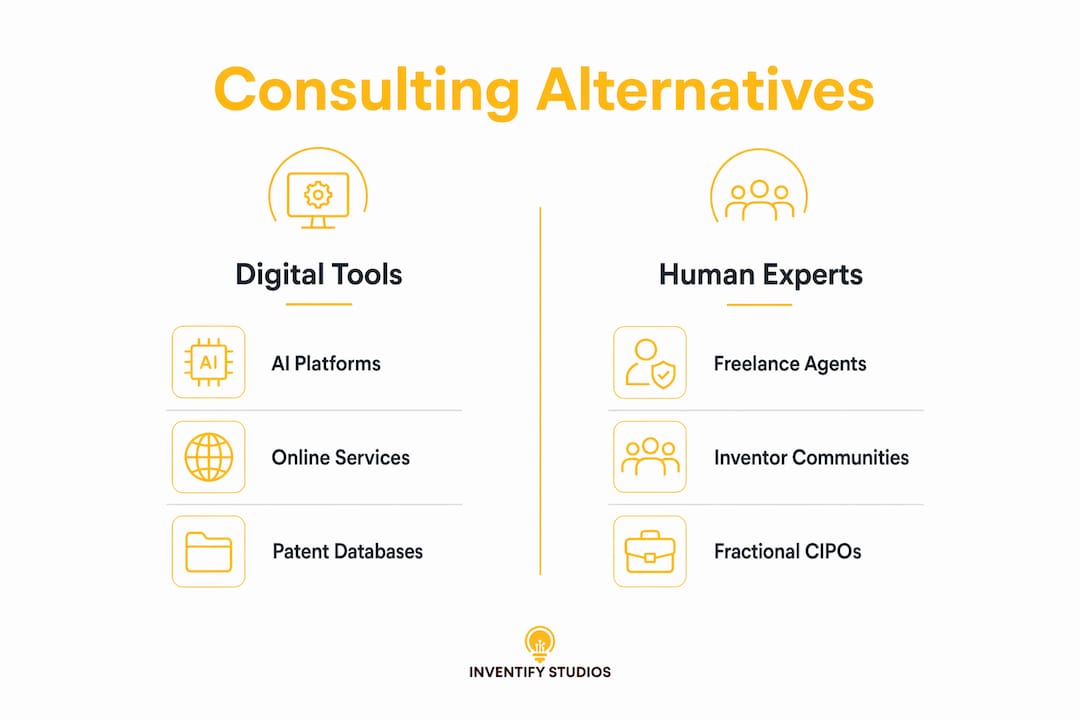
The five most accessible alternatives to traditional invention consulting firms are online invention platforms, freelance IP consultants, inventor communities, fractional Chief IP Officers, and AI-powered tools. Each serves a different stage of the invention process and carries a distinct cost profile.
Online invention platforms like Inventifystudios offer AI-generated prototypes, patent analysis, and marketability assessments at a fraction of traditional firm rates. They work best for inventors in the early concept and validation stages who need fast, structured feedback without committing to a long consulting contract.

Freelance IP consultants are patent attorneys or agents who work independently. You can find them on platforms like Upwork or through the USPTO's registered practitioner directory. Rates vary widely, but project-based freelancers typically cost 30 to 50 percent less than full-service firms for discrete tasks like prior art searches or provisional patent drafting.
Inventor communities such as the United Inventors Association or forums on Reddit's r/inventors provide peer feedback, informal consulting, and real-world experience from people who have already navigated the process. Online inventor communities support collaborative development and cost reduction, making them a strong complement to any paid alternative.
Fractional Chief IP Officers (CIPOs) are a newer model worth knowing. A fractional CIPO provides framework and data-driven filing decisions that align patents with your business strategy within a defined budget. This model suits pre-revenue startups that need structured IP oversight without a full-time hire.
AI-powered tools handle patent searches, prior art analysis, and prototype visualization at low or no cost. Tools like Google Patents, Espacenet, and Inventifystudios' AI prototype generator give inventors access to capabilities that previously required expensive consultants.
| Alternative | Typical Cost | Best Use Case | Key Limitation |
|---|---|---|---|
| Online invention platforms | Low to moderate | Concept validation, patent drafts | Limited legal advice |
| Freelance IP consultants | Moderate | Patent filing, prior art search | Quality varies by freelancer |
| Inventor communities | Free to low | Peer feedback, idea refinement | No formal IP expertise |
| Fractional CIPO | Moderate to high | Pre-revenue IP strategy | Overkill for very early stage |
| AI-powered tools | Free to low | Patent search, prototyping | Cannot replace legal counsel |
Pro Tip: When vetting a freelance IP consultant, check their USPTO registration number at the USPTO's official practitioner search tool. An unregistered consultant cannot legally represent you in patent proceedings, no matter how convincing their pitch sounds.
How to assess and choose the best consulting alternative for your invention
Choosing the right alternative starts with knowing exactly where your invention sits in its development cycle. The four main stages are conceptualization, patent filing, prototyping, and market validation. Each stage calls for a different type of support.
Follow these steps to make a clear-headed decision:
- Define your current stage. Are you still sketching ideas, or do you have a working prototype? Your stage determines whether you need idea validation tools, a patent search, CAD design support, or licensing strategy help.
- Set a realistic budget. Use the phased cost framework as a baseline. Allocate funds by stage rather than committing everything upfront to a single consulting package.
- Write SMART goals for your invention. A 2025 innovation framework recommends defining measurable goals such as reducing development cycle times by 20% within 12 months. Apply the same discipline to your invention timeline.
- Match the alternative to the task. Use AI tools and communities for early-stage validation. Bring in a freelance patent agent when you are ready to file. Consider a fractional CIPO only when you have multiple inventions or a funded startup requiring ongoing IP oversight.
- Evaluate credibility before paying. For platforms, check independent reviews on G2 or Trustpilot. For freelancers, request a sample deliverable or a paid discovery call before committing to a full project.
- Plan for iteration. Successful innovation is a repeatable system with governance, not a one-off event. Build your consulting approach around continuous review, not a single engagement.
Pro Tip: Before hiring any freelancer or platform, ask one specific question: "Can you show me a prior art search report you completed for a similar invention?" A confident, credible consultant will have one ready. Vague answers are a warning sign.
You can also review the invention development stages in detail to map your current position before making any consulting decision.
Common mistakes when using invention consulting alternatives
The most damaging mistake inventors make is filing patents too early, before market data confirms the invention's commercial viability. A premature provisional patent can cause delays and inflate costs if the invention changes significantly after filing. This is not a minor inefficiency. It is a capital drain that derails many first-time inventors before they reach the prototype stage.
The second major error is treating a patent as the finish line. A granted patent that cannot be enforced or aligned with a commercial strategy is the most expensive type of failure. Patents are business tools. They only create value when they protect something a competitor would actually want to copy and when you have the resources to enforce them.
Watch for these warning signs during your consulting process:
- A platform or consultant pushes you to file a full utility patent before you have validated demand.
- Fees are quoted as flat packages with no itemized breakdown of services.
- The consultant cannot explain how your patent claim scope connects to your target market.
- A community or forum contact offers to handle your patent filing for a "small fee" without showing USPTO credentials.
- You are spending more on consulting than on actual product development.
Skipping market validation is another costly shortcut. Before spending on patent preparation, use tools like Google Trends, Amazon product research, or a simple landing page test to confirm real demand. Many inventors skip this step because it feels less official than filing paperwork. The cost of skipping it is far higher. You can read more about why inventors skip consultation and the consequences in detail.
How digital tools and online communities enhance your options
Digital tools have made self-managed invention development genuinely viable for the first time. Rapid prototyping and CAD software offer accessible, cost-effective methods for developing tangible proofs of concept that previously required expensive industrial designers. A working 3D model, even a digital one, changes every conversation you have with investors, licensees, and patent agents.
The most useful digital tools by category include:
- Patent search: Google Patents, Espacenet, and the USPTO's Patent Full-Text Database for prior art research at no cost.
- CAD and prototyping: Fusion 360 (free for hobbyists), Tinkercad, and Inventifystudios' AI prototype generator for visual concept development.
- Market validation: Google Trends, SurveyMonkey, and Kickstarter for testing demand before committing to full development.
- IP analysis: Inventifystudios' patent analysis tool for patentability assessments and provisional patent drafting insights.
- Community support: United Inventors Association, Inventors Digest forums, and LinkedIn inventor groups for peer review and informal mentorship.
These tools do not replace legal counsel for complex patent filings. They do replace the expensive early-stage consulting work that most inventors pay for before they even know if their idea has a market. The role of inventor communities in providing peer feedback and informal consulting is well documented, and the cost is essentially zero.
The most effective approach combines digital tools for validation and prototyping with targeted human expertise for legal filings. Use technology to get as far as possible on your own, then bring in a professional for the tasks that carry legal weight.
Key takeaways
The most effective invention consulting strategy combines AI-powered tools and inventor communities for early-stage validation with targeted freelance or fractional IP expertise for patent filings and licensing decisions.
| Point | Details |
|---|---|
| Know your stage first | Match the consulting alternative to your current development phase before spending anything. |
| Patents are business tools | File only when market data supports commercial viability; premature filings waste capital. |
| Digital tools reduce early costs | AI prototype generators, patent search databases, and CAD tools replace expensive early-stage consulting. |
| Vet every consultant or platform | Check USPTO registration for freelancers and independent reviews for platforms before committing. |
| Build a continuous process | Treat invention development as an ongoing system, not a single consulting engagement. |
Why I think most inventors approach consulting backwards
Most inventors I have observed start by looking for a consultant and then try to fit their invention into whatever service that consultant offers. That is the wrong sequence entirely. The right sequence is to define what your invention actually needs at this specific moment, and then find the resource that delivers exactly that, nothing more.
The fractional CIPO model taught me something worth sharing: IP strategy and business strategy are the same conversation. When you separate them, you end up with patents that protect features no customer cares about. The inventors who get the most from consulting alternatives are the ones who treat every tool, every community post, and every freelance engagement as one input into a continuous decision process, not a one-time fix.
I have also seen inventors burn through their budgets on polished consulting packages that delivered beautiful reports and zero commercial traction. The report looked credible. The market did not agree. Validation comes from the market, not from a consultant's slide deck. Use the cheap tools first. Use communities. Test demand with a landing page before you spend a dollar on patent preparation. The startup patent strategy that works is the one built on real market signals, not assumptions.
The best consulting alternative is often the combination of several free or low-cost resources used in the right order. That requires discipline and a clear framework, but it is entirely within reach for any inventor willing to do the work.
— Hua
How Inventifystudios helps inventors move forward affordably
Inventifystudios is built specifically for inventors who want to move fast without overpaying for early-stage support.
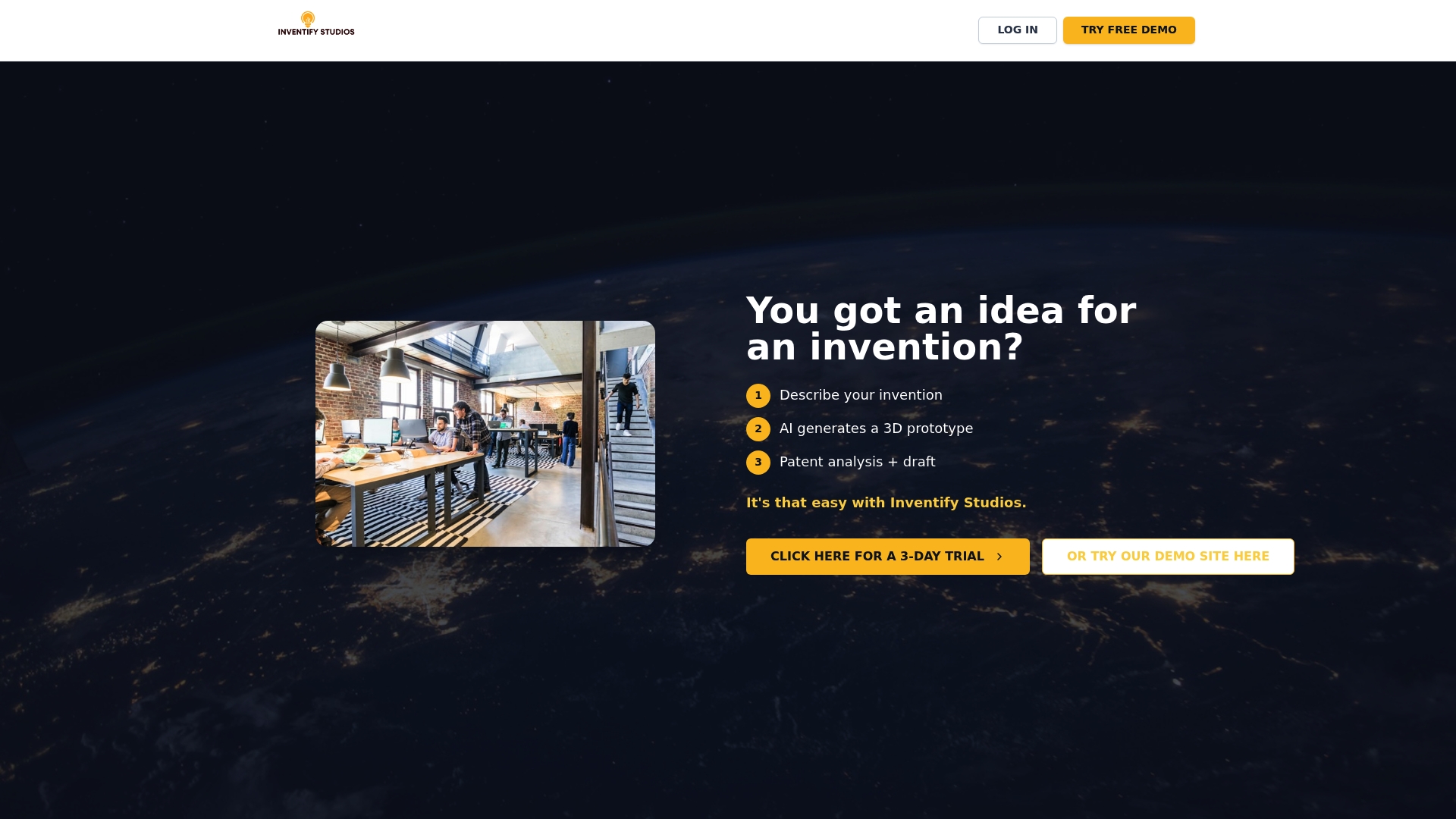
The platform gives you AI-generated 3D prototypes in minutes, patent patentability analysis, and provisional patent drafting insights, all in one place. You do not need a full consulting retainer to validate your concept or prepare your first patent draft. Inventifystudios removes the financial barrier between your idea and its first real test. Start with the invention detail page to see how the platform maps to your specific development stage, or go directly to create your invention and put your idea through its first structured analysis today.
FAQ
What are the cheapest alternatives to invention consulting firms?
The lowest-cost options are inventor communities, free patent search databases like Google Patents and Espacenet, and AI-powered platforms like Inventifystudios. These cover early-stage validation and patent research without consulting fees.
When should I hire a freelance patent agent instead of using a platform?
Hire a registered patent agent when you are ready to file a provisional or utility patent application. AI tools and platforms handle research and drafting prep, but only a USPTO-registered practitioner can legally represent you in patent proceedings.
How do I know if a consulting alternative is credible?
Check for verifiable credentials: USPTO registration for patent consultants, independent reviews on G2 or Trustpilot for platforms, and a portfolio of completed work for freelancers. Any consultant who cannot provide these should be avoided.
Is filing a provisional patent early a good strategy?
Filing too early is one of the most common and costly mistakes. A provisional patent only buys 12 months of protection. File only after you have validated market demand and confirmed your invention's core claims are stable.
Can digital tools fully replace invention consulting?
Digital tools replace early-stage consulting tasks like patent searches, concept visualization, and market testing. They do not replace legal counsel for patent filings, IP strategy, or licensing negotiations, where professional expertise directly affects the outcome.