

The invention prototype patent connection is defined by one legal standard: enablement, not physical proof. The USPTO requires a written description detailed enough for a skilled person to reproduce your invention, not a finished product sitting on your desk. This distinction changes everything about how you plan your prototype and patent strategy. You do not need to build before you file. But knowing when and how to build, and how that feeds your patent application, separates inventors who get broad protection from those who get narrow, easily circumvented patents.
What the invention prototype patent connection actually requires legally
You are not legally required to build a physical prototype to file a US patent application. The USPTO's standard, codified in 35 U.S.C. 112, is enablement: your written description and drawings must allow a person skilled in the relevant field to reproduce the invention without guessing. That is the entire legal threshold.
This surprises most first-time inventors. The common assumption is that "patenting an idea" means submitting a working model. That was actually true before 1880, when the USPTO dropped the physical model requirement. Today, solid documentation substitutes for prototypes in the eyes of patent law. Software algorithms, chemical formulas, and mechanical systems are routinely patented through CAD drawings, simulations, and technical specifications alone.
What a legally sufficient disclosure must include:
- A clear description of the problem your invention solves
- Identification of every component and how each one functions
- How the components interact with each other
- How your invention differs from existing solutions (prior art)
- At least one working embodiment described in enough detail to reproduce
"Patent law prioritizes enablement, not physical proof. A rigorous written description with detailed drawings carries the same legal weight as a working prototype in most patent categories."
The critical mistake inventors make is conflating "patenting an idea" with "patenting a vague concept." The USPTO does not protect abstract ideas. It protects specific, reproducible inventions. If your description leaves a skilled engineer guessing about how a component works or connects, your application fails the enablement test regardless of whether you have a prototype. The invention summary in your application carries enormous weight in establishing this threshold.
How does building a prototype benefit your patent strategy?
Prototypes are not legally required, but they expose technical issues that written descriptions miss. Patent attorneys consistently report that inventors who prototype before filing submit stronger applications with fewer post-filing revisions. The physical act of building forces you to solve problems you did not know existed, and those solutions become patentable features.
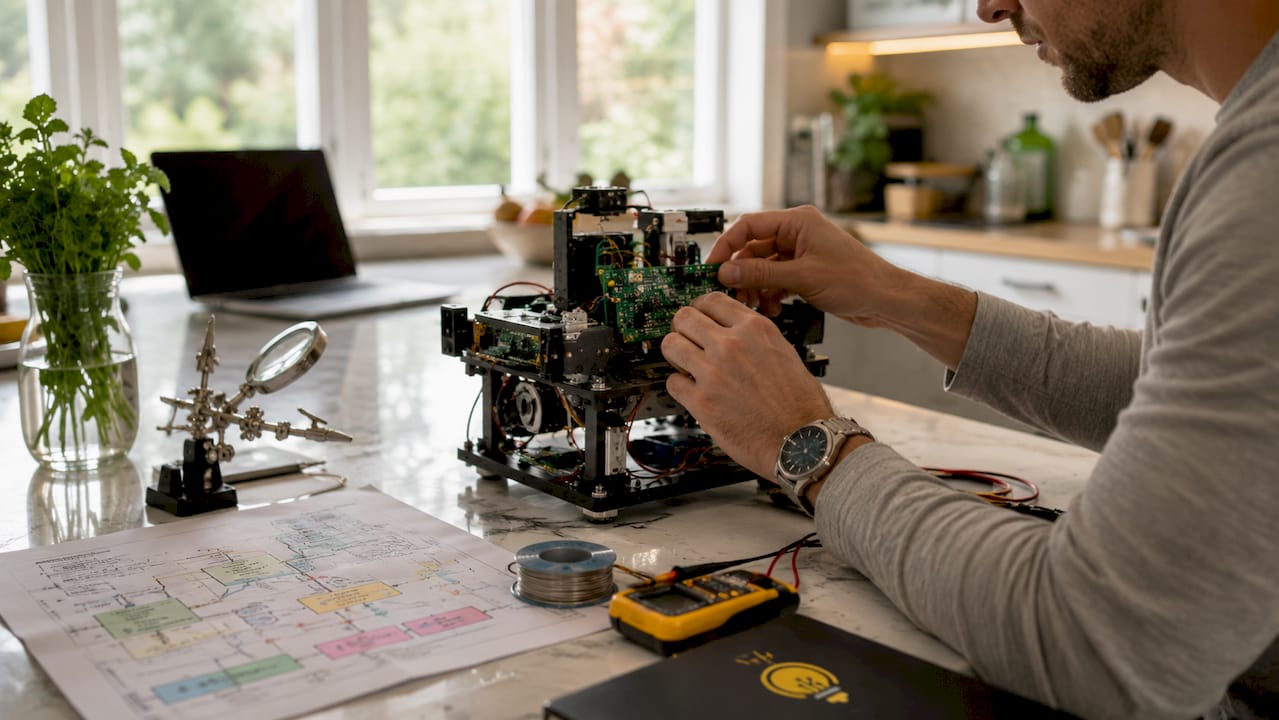
Consider a mechanical fastener inventor who describes a spring-loaded locking mechanism on paper. During prototyping, they discover the spring tension causes premature wear. The fix, a magnetic locking alternative, becomes a second patentable embodiment. Without prototyping, that insight never surfaces, and the patent covers only the inferior spring design. This is why prototyping improves patent quality in ways that pure documentation cannot replicate.
Strategic benefits of prototyping before or during patent filing:
- Broader claims: Discovering functional alternatives during prototyping lets you draft claims that cover multiple mechanisms, not just one specific design.
- Stronger examiner communication: Patent examiners understand applications faster when drawings reflect tested, real-world configurations.
- Investor credibility: A working prototype alongside a patent pending application signals market readiness to angel investors and venture capital firms.
- Reduced re-filing costs: Catching design flaws before filing prevents expensive continuation applications later.
Working prototypes or experimental data also strengthen patent credibility by validating that the invention actually functions as described. Patents can be invalidated if the described invention does not work. A proof-of-concept prototype, even a partial one, provides that functional validation.
Pro Tip: Do not wait for a perfect prototype before filing. A partial prototype that proves the core mechanism works is enough to support a strong provisional application. Perfect the design during the 12-month provisional window.
When and how to file provisional and non-provisional patents
The provisional patent application (PPA) is the most practical tool in the prototype patent process. A PPA costs between $2,000 and $6,000 and grants 12 months of "patent pending" status. That window lets you refine your prototype, test the market, and attract funding before committing to the more expensive non-provisional utility patent.
The strategic sequence most experienced inventors follow:
- Document your invention thoroughly before any public disclosure. Write down every component, function, and variation you can envision.
- File a provisional patent application as soon as your description is enabling, even if your prototype is incomplete.
- Build and refine your prototype during the 12-month provisional window. Every improvement you discover can be captured in an updated disclosure.
- File additional provisionals if major design changes occur. Multiple provisionals can feed into a single non-provisional application, each carrying its own priority date.
- Convert to a non-provisional utility patent before the 12-month deadline expires. This is the application that gets examined and, if approved, issues as a granted patent.
| Filing stage | Prototype status | Key benefit |
|---|---|---|
| Provisional patent application | Partial or conceptual | Secures priority date at lower cost |
| First prototype iteration | Core mechanism tested | Validates enablement, informs claims |
| Updated provisional (if needed) | Refined design | Captures new features with fresh priority dates |
| Non-provisional utility patent | Functional prototype preferred | Full examination with broadest possible claims |
The risk of filing too early is real. Vague disclosures fail the enablement test and can result in rejected applications or patents so narrow they offer no real protection. The risk of waiting too long is equally serious. A competitor who files first wins the priority date under the US first-to-file system, regardless of who invented first. Filing a provisional before prototype completion is a widely used and legally sound strategy that balances both risks.
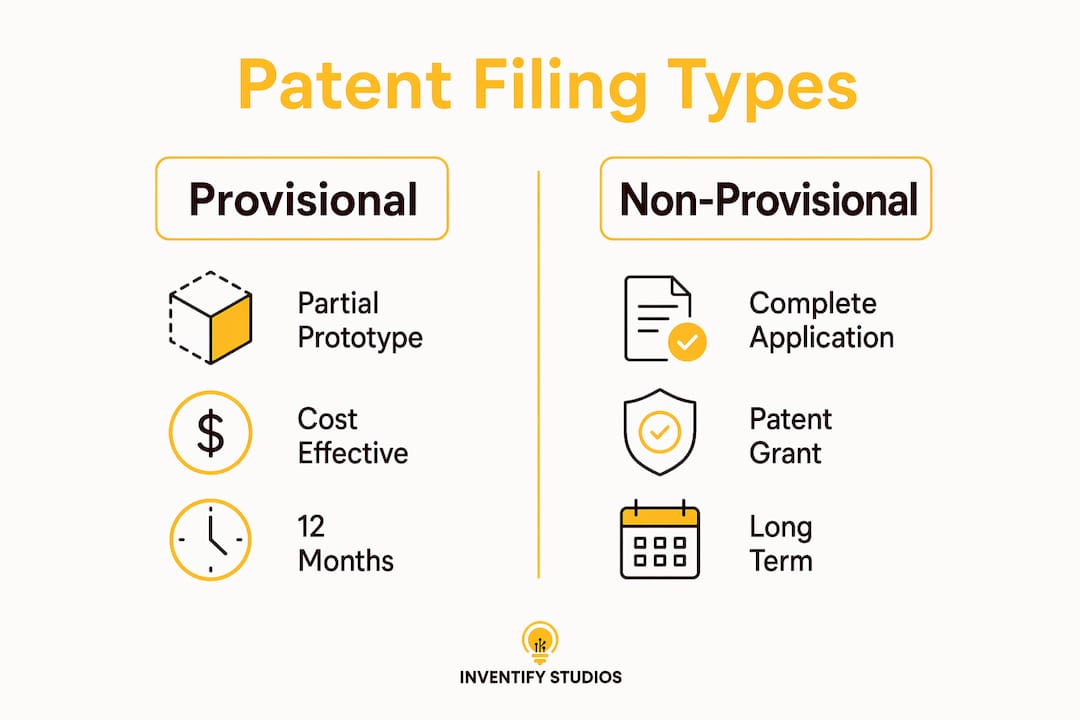
Many complex inventions are filed on sufficient description even when full prototypes are still in development. The key is that your description must be enabling at the time of filing, not that your prototype must be finished.
How to prepare documentation that connects your invention and patent
Documentation is where the invention-to-patent journey either succeeds or fails. Your patent application must describe not just what your invention is, but what it does, how it does it, and why it is different from everything that came before. Weak documentation produces weak patents.
A thorough patent disclosure should cover:
- The problem: State specifically what existing solutions fail to do and why that gap matters.
- Components and interactions: Name every part, describe its material or mechanism, and explain how it connects to adjacent components.
- Functional alternatives: If a spring could be replaced by a magnet or a motor, say so. Including alternative components in your disclosure broadens your patent scope and makes it harder for competitors to design around your claims.
- Differences from prior art: Explicitly state what makes your invention novel compared to existing patents or products.
- Multiple embodiments: Describe at least two or three variations of your invention. This protects future product iterations under the same patent.
| Documentation element | Weak approach | Strong approach |
|---|---|---|
| Problem statement | "Improves existing products" | Specific failure mode in current solutions |
| Component description | Generic part names | Named materials, dimensions, and functions |
| Claim scope | Single specific design | Functional language covering multiple mechanisms |
| Prior art distinction | Not addressed | Explicit comparison to known solutions |
Filing overly prototype-specific claims is a trap. If your patent only protects the exact spring mechanism in your current prototype, a competitor can switch to a magnetic mechanism and avoid infringement entirely. Drafting for functional variations is what separates patents that hold up in court from patents that exist only on paper.
Public disclosure before filing is a separate and serious risk. Discussing your invention at a trade show, posting on social media, or sharing details without a signed NDA can trigger the one-year US grace period and immediately forfeit international patent rights. NDAs are critical when sharing invention details with manufacturers, investors, or potential partners before your provisional is filed. The invention development stages that precede filing are the most legally vulnerable period for any inventor.
Pro Tip: Use the claim drafting guidelines at Inventifystudios to draft functional claims that cover your invention's purpose, not just its current physical form. This one step can double the commercial value of your patent.
Key takeaways
The strongest patent protection comes from enabling documentation and strategic filing timing, not from having a finished prototype in hand.
| Point | Details |
|---|---|
| Enablement is the legal standard | Your written description must let a skilled person reproduce the invention, no physical prototype required. |
| Prototypes strengthen claims | Building before filing uncovers functional alternatives that broaden patent scope and reduce re-filing costs. |
| File provisionals early | A provisional patent application secures your priority date for 12 months while you refine your design. |
| Document functional alternatives | Describing multiple mechanisms in your disclosure prevents competitors from designing around your patent. |
| Protect before disclosing | Use NDAs before sharing invention details, and file at minimum a provisional before any public disclosure. |
Why I think most inventors get the prototype-patent sequence backwards
Most inventors I have worked with treat the prototype as the finish line and the patent as the paperwork that follows. That sequence costs them. By the time they have a polished prototype, they have often shown it to manufacturers, pitched investors without NDAs, or posted early versions online. Their international patent rights are gone before they file a single document.
The smarter sequence is to treat documentation as the first act of invention. The moment you can describe your invention in enough detail to enable reproduction, you have something worth protecting. File the provisional. Then build. The 12-month window exists precisely for this reason.
I have also seen inventors go too far in the other direction, filing provisional applications so thin they barely describe the core mechanism. When the non-provisional deadline arrives, they have a strong prototype but a weak priority date because the original disclosure did not actually enable the improved design. The provisional has to be enabling at the time of filing, not just a placeholder.
The inventors who get the best outcomes treat prototyping and patent documentation as parallel tracks, not sequential steps. Every design decision during prototyping feeds back into the disclosure. Every claim drafted pushes the inventor to think about functional alternatives they have not yet built. That back-and-forth is where real patent value is created.
— Hua
How Inventifystudios helps you build that connection
Inventifystudios is built for exactly this challenge: turning your invention concept into documented, patent-ready material without the cost of traditional consulting. The Invention Detail service generates thorough invention documentation that covers components, interactions, functional alternatives, and prior art distinctions, giving you the enabling disclosure your patent application needs. The Create Invention tool generates AI-powered 3D prototypes in minutes, so you can visualize, refine, and document your design before committing to physical manufacturing costs. Together, these tools put the prototype patent process within reach for first-time inventors and experienced innovators alike, without the $10,000+ consulting fees.
FAQ
Do I need a prototype to file a patent?
No. The USPTO requires an enabling written description and drawings, not a physical prototype. Software, chemical processes, and mechanical inventions are routinely patented through documentation alone.
What is a provisional patent application?
A provisional patent application is a lower-cost filing that grants 12 months of "patent pending" status and secures your priority date. It costs between $2,000 and $6,000 and must be followed by a non-provisional application within 12 months.
How does a prototype improve my patent application?
Prototyping uncovers design flaws and functional alternatives before filing, which allows you to draft broader claims and reduce the risk of expensive re-filings after the patent is granted.
Can I lose my patent rights by sharing my invention publicly?
Yes. Public disclosure before filing triggers a one-year grace period in the US and can immediately forfeit international patent rights. Always use NDAs and file at minimum a provisional application before any public disclosure.
What makes a patent disclosure "enabling"?
An enabling disclosure describes the problem, every component and its function, how components interact, and how the invention differs from prior art, in enough detail that a skilled person in the field could reproduce it without guessing.