
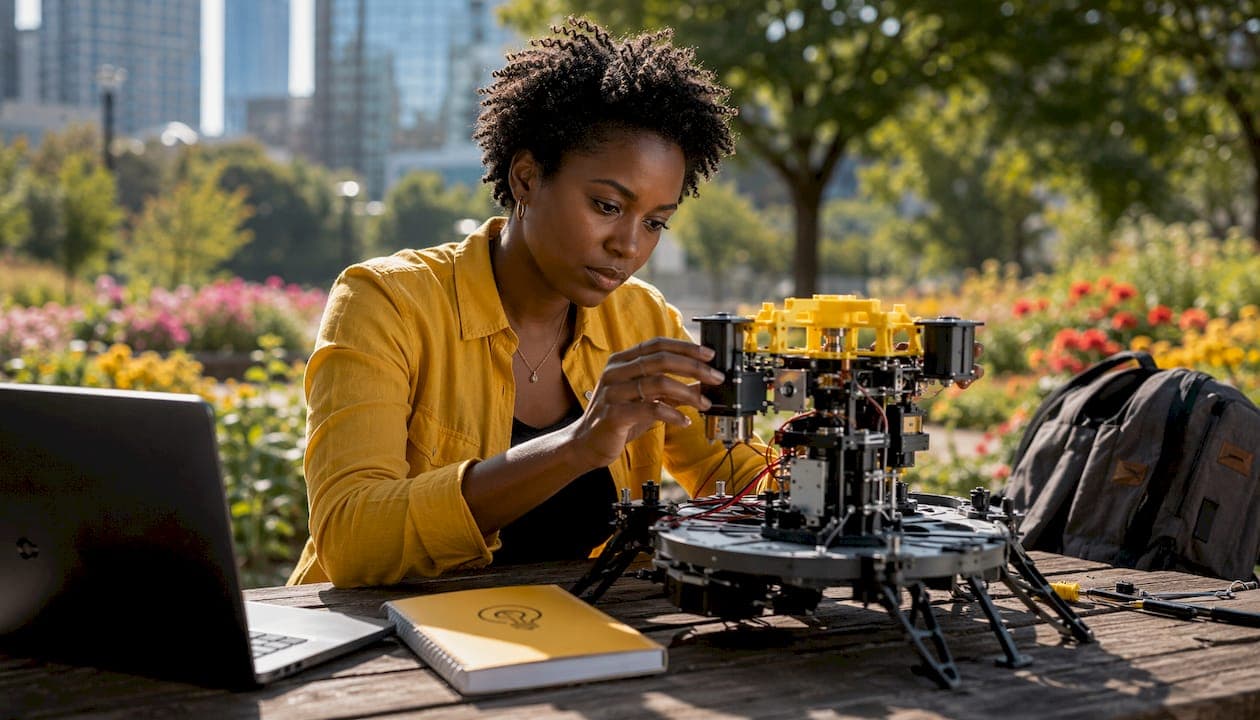
Prototypes are not presentation tools. They are discovery tools. The role of prototype in product development is to give you a testable, tangible model early enough to catch expensive mistakes before they happen. As Marty Cagan defines it, the primary purpose of prototyping is to test risks and explore consequences, not to create polished artifacts for show. That distinction changes everything about how you should approach your invention.
Here is what prototyping actually does for you as an inventor:
- Validates your concept before you commit money to manufacturing
- Surfaces usability problems early, when fixes are cheap
- Aligns stakeholders around a shared, tangible reference point
- Supports patent drafting by clarifying what your invention actually does
- Reduces redesign costs significantly: teams that skip prototyping spend 3–5x more on post-development redesign costs
Tools like Inventifystudios and its Inventify AI prototype generator make this process faster and more affordable than ever, letting individual inventors create 3D prototypes and assess patentability without traditional consulting fees.
Table of Contents
- What is the primary purpose of prototyping in invention development?
- How prototypes help you communicate and align everyone involved
- How prototyping stages connect to your patent strategy
- How AI tools accelerate prototyping and patent analysis for inventors
- Real examples where prototyping changed the outcome
- Inventifystudios gives inventors a faster path from idea to protected concept
- Key Takeaways
What is the primary purpose of prototyping in invention development?
The goal is discovery, not demonstration. Many inventors build prototypes to impress investors, but that mindset leads to wasted resources. Prototyping as a mindset means you treat every model as a learning tool, not a finished product. You build to find out what is wrong, not to prove you are right.
This fail-fast approach is what separates successful inventors from those who sink months into an idea that a two-day paper prototype could have disproved.
Common prototype types and their roles:
- Paper prototypes: Sketches or cardboard models used for rapid ideation and early concept testing. Zero cost, maximum speed.
- Digital mockups: Screen-based or CAD models that test layout, flow, and visual design without functional components.
- Functional prototypes: Working models that test mechanical or software behavior under real conditions.
- High-fidelity prototypes: Near-final versions used for detailed usability testing and investor presentations.
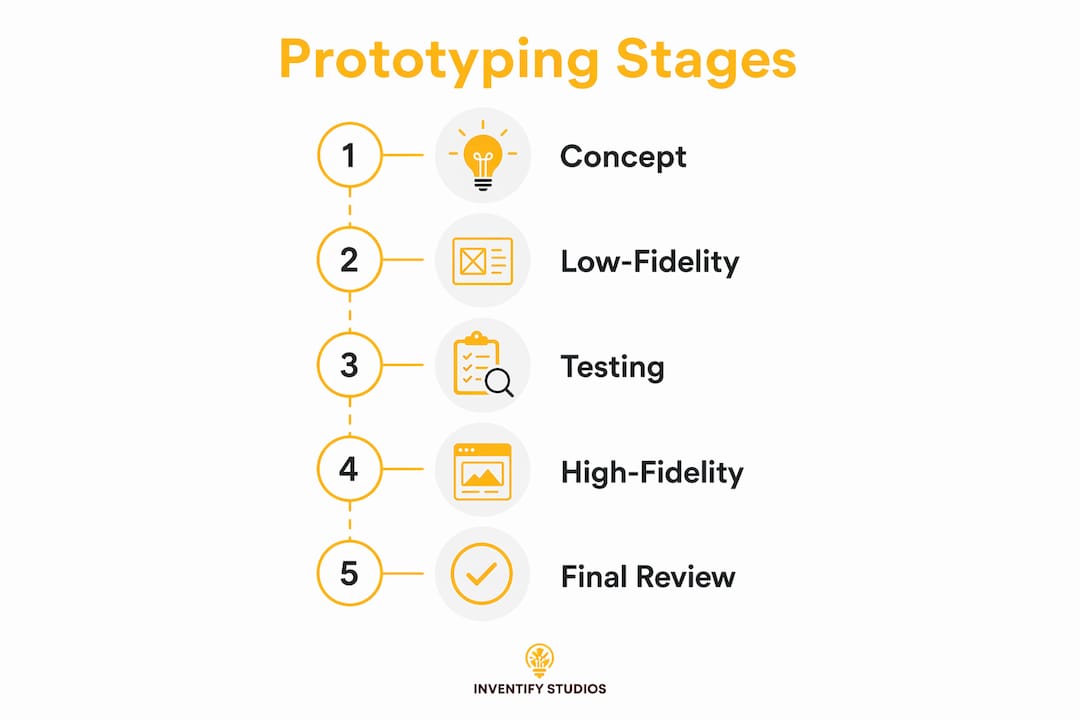
Low-fidelity prototypes belong at the start of your process. High-fidelity versions come later, once you have validated the core concept. Jumping straight to high-fidelity is one of the most common and costly mistakes individual inventors make.
Pro Tip: Never get emotionally attached to an early prototype. If testing reveals a flaw, that is a win, not a failure. The model exists to be proven wrong so your final invention can be right.
How prototypes help you communicate and align everyone involved
A prototype does something a slide deck cannot: it gives every person in the room the same concrete reference point. Prototypes create a shared mental model that helps non-technical stakeholders and engineers understand the product together, before a single line of production code is written or a single component is manufactured.

For individual inventors, this matters enormously. When you pitch to a manufacturer, a potential partner, or a patent attorney, a physical or digital prototype removes ambiguity. People stop debating what the product might do and start reacting to what it actually does.
Best practices for user testing and feedback integration:
- Test with real users as early as possible, even with paper prototypes
- Ask open-ended questions: "What did you expect to happen?" rather than "Did you like it?"
- Document every piece of feedback, not just the positive responses
- Prioritize feedback that reveals assumptions you did not know you were making
- Iterate before moving to a higher-fidelity version
Skipping this feedback loop is what leads to costly late-stage redesigns. Early and iterative prototyping consistently produces more functional ideas and fewer design flaws across product categories.
How prototyping stages connect to your patent strategy
Prototyping and patenting are not separate tracks. They inform each other at every stage. Understanding the prototype-to-patent connection helps you protect the right features at the right time.
Here is how the stages typically progress and where patent activities fit in:
| Prototype Stage | Fidelity Level | Key Activity | Patent-Related Milestone |
|---|---|---|---|
| Concept sketch | Very low | Ideation and scope definition | Identify core novel features |
| Proof of concept | Low | Feasibility testing | Confirm invention is non-obvious |
| Functional prototype | Medium | Mechanism and usability testing | Draft provisional patent claims |
| Refined prototype | High | User testing and stakeholder review | Finalize patent drawings and specs |
| Pre-production model | Very high | Manufacturing validation | File non-provisional patent application |
Feature prioritization for early prototypes:
- Build only what you need to test your riskiest assumption
- Exclude cosmetic details until the core function is validated
- Define one primary question each prototype must answer
- Resist adding features before the current version is tested
Inventifystudios integrates this staged approach directly into its platform. Inventors can move from concept to AI-generated 3D prototype and patentability assessment without switching tools or hiring separate consultants. You can explore the full product prototype stages breakdown to map your own invention's path.
How AI tools accelerate prototyping and patent analysis for inventors
AI has fundamentally changed what a solo inventor can accomplish. The Inventify AI prototype generator lets you create 3D prototype visuals in minutes from a text or concept description, skipping the weeks of CAD work that used to require a professional. That speed matters because AI-driven prototypes reduce the design-to-development gap and produce more reliable usability results.
Beyond visualization, Inventifystudios runs AI-powered patentability analysis against existing patents, flagging conflicts and identifying protectable claims before you invest in a full patent attorney engagement. The platform also generates provisional patent draft narratives tailored to your specific invention.
Best practices for integrating AI tools into your workflow:
- Use the AI prototype generator to visualize your concept before committing to physical materials
- Run patentability analysis early, ideally after your proof-of-concept stage
- Use AI-generated provisional drafts as a starting framework, then refine with a patent professional
- Iterate your AI prototype alongside your physical model to keep both in sync
For app-based inventions and digital products, understanding how app prototyping works alongside AI tools gives you a complete picture of the validation process from concept to launch.
Real examples where prototyping changed the outcome
The IDEO team working with the Holocaust Memorial Museum prototyped an app hypothesis first, then discovered it reduced conversation between visitors rather than increasing it. They pivoted to physical artifacts, which produced far more engagement. That pivot cost almost nothing because it happened at the prototype stage, not after a full product launch.
For individual inventors, the pattern repeats constantly. A first-time inventor developing a kitchen tool might spend weeks refining a paper prototype before discovering that the grip angle causes hand fatigue. Catching that in cardboard costs an afternoon. Catching it after injection molding costs thousands of dollars and months of delay.
The broader principle: prototyping throughout the design process, not just at the end, is what separates products that succeed from those that stall. Inventors who treat prototyping as a continuous cycle rather than a single pre-launch checkpoint consistently reach better outcomes with fewer resources spent.
Inventifystudios gives inventors a faster path from idea to protected concept
Most inventors face the same bottleneck: turning a raw idea into something testable and protectable costs too much and takes too long with traditional methods. Inventifystudios removes that bottleneck directly.
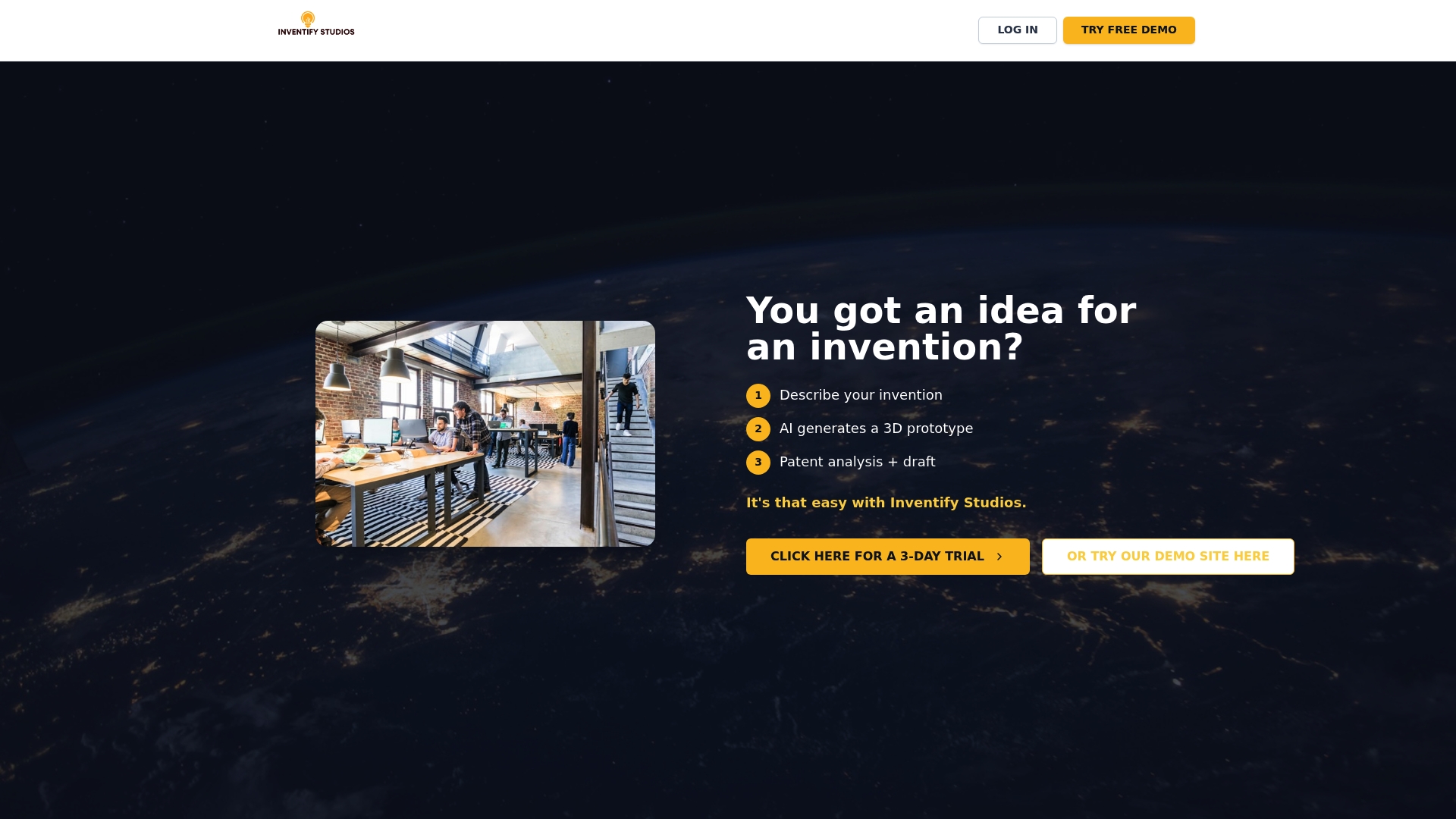
With Inventifystudios, you get AI-generated 3D prototypes in minutes, not weeks. You get patentability analysis that flags prior art before you invest in a full filing. You get provisional patent draft narratives built around your specific invention, not generic templates. All of it lives in one platform, at a fraction of what traditional consulting services charge. Whether you are a first-time inventor with a sketch on a napkin or a repeat creator with a working model, Inventifystudios gives you the tools to validate your concept and protect it fast. Start building your invention concept on Inventifystudios today.
Key Takeaways
Prototyping is the single most effective way to reduce invention risk, and AI tools now make it accessible to any individual inventor regardless of budget or technical background.
| Point | Details |
|---|---|
| Discovery over presentation | Prototypes exist to test risks and find flaws early, not to impress stakeholders with polish. |
| Cost of skipping prototypes | Teams that skip prototyping spend 3–5x more on post-development redesign costs. |
| Staged fidelity progression | Start with paper or low-fidelity models, then advance to high-fidelity only after core concepts are validated. |
| Prototyping supports patenting | Each prototype stage maps to a patent activity, from identifying novel features to finalizing patent drawings. |
| Inventifystudios | Combines AI prototype generation, patentability analysis, and provisional patent drafting in one affordable platform for individual inventors. |