

Invention development budget planning is the process of estimating and allocating funds across every phase required to bring a new invention from concept to market readiness. First-time inventors routinely underestimate total costs, with patenting alone running $20,000–$45,000 before a single unit ships. Add prototyping, tooling, and manufacturing, and the numbers climb fast. The inventors who succeed are not the ones with the biggest budgets. They are the ones who plan spending by phase, protect cash runway, and make every dollar conditional on validated progress.
What are the main cost components of invention development?
Understanding product development costs starts with knowing which buckets your money falls into. There are three primary phases: research and IP protection, development and prototyping, and licensing or manufacturing.
Patent and IP Costs
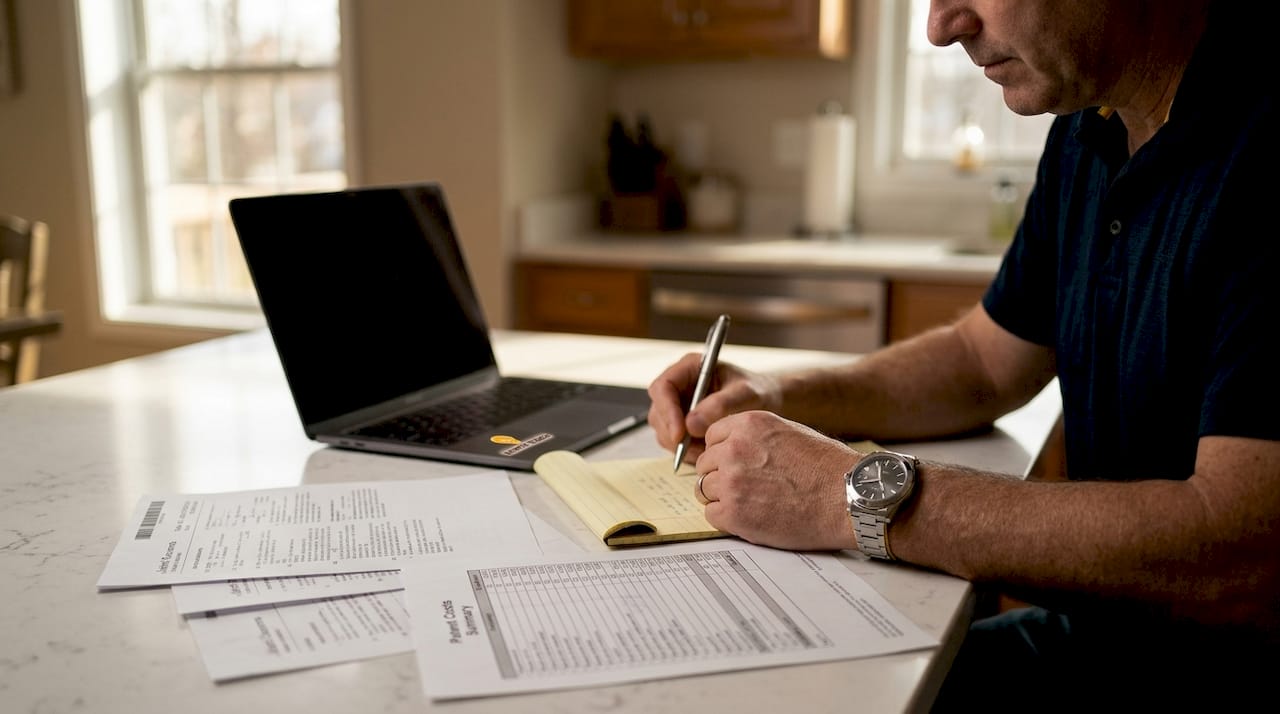
Patent costs are the first major line item for most inventors. A patent search runs $500–$2,000. A provisional patent application costs $1,500–$4,000 and buys you 12 months of "patent pending" status. A full utility patent, including attorney drafting and filing fees, adds another $2,500–$15,000 or more. Total patenting costs for a first-time inventor commonly land between $20,000 and $45,000 when you include prosecution and responses to office actions. That range reflects the real cost of protecting an idea through the full patent lifecycle.
Prototyping and Development Costs
CAD drawings typically cost $1,000–$3,000 and are the foundation for every prototype that follows. Prototyping costs vary widely by method: a simple FDM 3D printed model runs $20–$200, CNC machined parts cost $100–$1,000 or more, urethane casting runs $200–$5,000, and injection-molded prototypes jump to $1,000–$10,000 due to tooling. Each method serves a different stage of development. Early-stage 3D printing is for concept validation. Injection molding is for pre-production confirmation.
Tooling and Manufacturing Costs
Tooling is where budgets get shocked. Depending on part complexity and production method, tooling costs range from $5,000 to $80,000. First production runs add minimum order quantity (MOQ) costs on top. Licensing your invention to a manufacturer shifts tooling responsibility to them, which significantly changes your cost profile. Understanding this distinction early shapes your entire financial plan.
| Cost Category | Typical Range | Stage |
|---|---|---|
| Patent search | $500–$2,000 | Pre-filing |
| Provisional patent | $1,500–$4,000 | Early protection |
| Utility patent (full) | $2,500–$15,000+ | Post-validation |
| CAD drawings | $1,000–$3,000 | Pre-prototype |
| 3D printed prototype | $20–$200+ | Concept validation |
| CNC machined prototype | $100–$1,000+ | Functional testing |
| Injection mold tooling | $5,000–$80,000 | Pre-production |
Pro Tip: Sequence your spending. File a provisional patent and build a 3D printed prototype before spending anything on tooling or utility patents. Validate the concept first, then invest in protection and production.
How do you create an effective invention development budget plan?
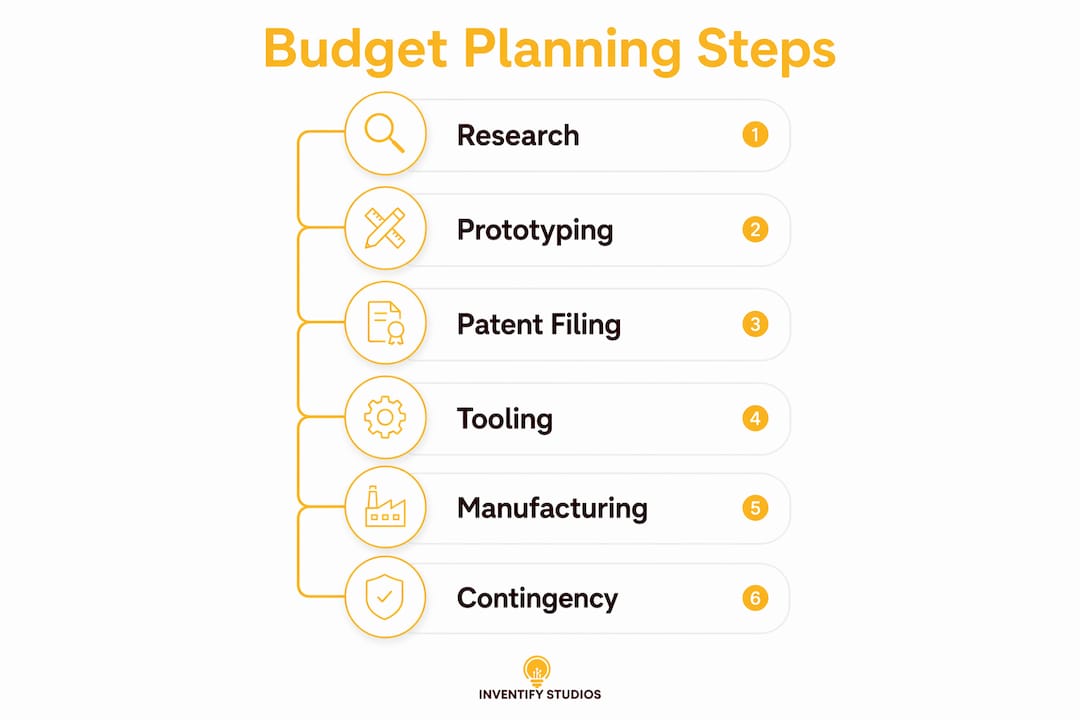
A solid budget plan for invention development follows a staged, evidence-based structure. Here is a step-by-step approach that works for first-time inventors and experienced entrepreneurs alike.
-
Define your development goal. Are you licensing the invention or manufacturing it yourself? This single decision changes your cost profile by tens of thousands of dollars. Licensing paths skip tooling costs. Manufacturing paths require them.
-
Map your invention development stages. Break the project into phases: concept and research, IP protection, prototyping, testing, and commercialization. Assign a budget range to each phase before spending a dollar.
-
Benchmark costs against real data. Research similar inventions and use published cost ranges as anchors. The ranges in the table above are a reliable starting point for cost estimation for inventions in most product categories.
-
Use a stage-gated patent strategy. A stage-gated patent filing approach budgets $2,000–$5,000 for one or two provisionals pre-seed, $4,000–$20,000 to convert at the seed stage, and $30,000–$100,000 for multiple utility patents at Series A. This prevents overspending on IP before you have commercial proof.
-
Build in a contingency reserve. A 10–20% contingency reserve is standard practice in project budgeting. It covers unexpected prototype iterations, attorney revision rounds, and supplier delays. Without it, a single surprise expense can stall your entire project.
-
Align your budget schedule to patent timelines. Patent prosecution averages 24–36 months from filing to grant. Plan your cash flow around patent pendency, not patent grant. Waiting for a granted patent before launching a product is a costly mistake.
-
Review and adjust at each milestone. Treat your budget as a living document. Reassess spending at the end of each phase based on what you learned.
Pro Tip: Spend in stages, not all at once. Protect your cash runway by releasing budget only when the previous phase produces a clear go or no-go signal. This is how professional product developers avoid running out of money mid-project.
How can budget planning help you control invention costs and risks?
Effective financial planning for development does more than track spending. It reduces the risk of costly decisions made without evidence.
-
Treat IP as a staged investment, not a race. IP spending is not about more patents earlier. Investing in the right patents at the right time preserves runway. Filing multiple utility patents before you have a validated product is one of the most common ways inventors waste money.
-
Use the provisional-to-nonprovisional conversion as a quality gate. Convert provisionals to utility patents only at month 11, and only for inventions showing commercial traction. This single discipline can save $10,000 or more per concept that does not gain market validation.
-
Control prototyping costs through method selection. Early inexpensive 3D printing enables fast iteration before you commit to expensive tooling. Prototyping method selection is a direct cost-control lever. Choosing CNC machining for a first-pass concept prototype is an expensive mistake you can avoid.
-
Stage tooling investment after design stability. Approach prototyping as generating decision evidence, building iteratively until the design is stable. Paying for tooling before the design is locked means paying for it twice.
-
Plan for international patent costs separately. PCT filing costs run $4,000–$8,000, and national phase entry across multiple countries can reach $30,000–$50,000 or more. These are lump-sum costs that hit at month 30. Budget for them only if your commercial traction justifies international protection.
-
Balance licensing versus manufacturing risk. Licensing shifts tooling and production costs to a partner but reduces your upside. Manufacturing gives you full margin control but requires $50,000 or more in tooling and production capital. Your budget plan should model both scenarios before you commit.
What are the most common invention budgeting mistakes?
Most budget failures in invention development come from the same repeatable errors. Knowing them in advance is the clearest advantage you can give yourself.
-
Ignoring patent prosecution timelines. Patent applications take 24–36 months on average to reach grant. Inventors who plan cash flow assuming a 6-month timeline run out of runway before their IP is protected.
-
Skipping the contingency reserve. A budget with no buffer is a budget that fails at the first surprise. The standard 10–20% contingency reserve exists because unexpected costs are not exceptions. They are the rule.
-
Overinvesting in patents before validation. Filing utility patents on unvalidated concepts is speculative spending. File a provisional, test the market, then convert. This is the discipline that separates funded inventors from stalled ones.
-
Underestimating prototyping costs. Many first-time inventors budget for one prototype. Real development requires multiple iterations. Each design change before tooling costs hundreds of dollars. Each change after tooling costs thousands.
-
Ignoring MOQ and tooling requirements. Manufacturers require minimum order quantities that tie up capital. Tooling costs are non-refundable. Inventors who discover these requirements after committing to a manufacturing path often find their budget is already exhausted.
-
Skipping a formal invention risk assessment. Risk assessment identifies the highest-cost failure points before you spend money on them. Skipping it means discovering those failure points after the budget is gone.
Pro Tip: Validate your invention concept with a low-cost prototype and a small group of real potential buyers before filing a utility patent or ordering tooling. Early validation is the cheapest risk-reduction tool available to any inventor.
Key takeaways
Effective invention development budget planning requires phased spending, a contingency reserve, and evidence-based decisions at every stage to protect your runway and maximize your invention's chances of success.
| Point | Details |
|---|---|
| Know your cost categories | Patent, prototyping, tooling, and manufacturing costs each require a separate budget line. |
| Use a stage-gated patent strategy | File provisionals first, then convert only validated inventions to utility patents at month 11. |
| Build in a contingency reserve | Allocate 10–20% of your total budget for unexpected costs at every development phase. |
| Sequence spending by phase | Complete concept validation before investing in tooling or full utility patent prosecution. |
| Plan cash flow around patent timelines | Patent grants take 24–36 months. Budget for the full pendency period, not just the filing date. |
What i have learned about budgeting for invention development
The discipline that separates funded inventors from stalled ones
After working with inventors at every stage, the pattern is consistent. The ones who run out of money are not the ones with bad ideas. They are the ones who spent in the wrong order.
The most common version of this mistake is filing a full utility patent on a concept that has never been tested with a real buyer. It feels like progress. It is actually speculative spending. A provisional patent costs a fraction of a utility patent and gives you 12 months to validate whether anyone actually wants what you are building. That 12 months is the most valuable time in your entire development cycle.
The second mistake I see constantly is treating the budget as a fixed document. Real invention development is iterative. Costs shift. Designs change. A budget that cannot flex is a budget that fails. Build your contingency reserve, review your plan at every milestone, and be willing to cut a phase if the evidence does not support continuing.
The inventors who succeed treat every dollar as a decision. They ask: does spending this now give me better information, or am I spending it because it feels like the right next step? That question, asked consistently, is the most powerful budgeting tool you have.
— Hua
Start your invention budget plan with Inventifystudios
Knowing the cost categories is one thing. Building a plan that actually holds up through development is another.
Inventifystudios gives you the tools to move from idea to structured invention plan without the cost of traditional consulting. The platform's AI-powered prototype generator lets you visualize your concept in minutes, and the patent analysis tools help you assess patentability before committing to attorney fees. Use the Create Invention page to start mapping your invention's development path, or explore the Invention Detail page to see how Inventifystudios structures the full development lifecycle. Both tools are built to help you spend smarter at every stage.
FAQ
What does invention development budget planning include?
Invention development budget planning covers all cost categories from patent search and provisional filing through prototyping, tooling, and first production runs. A complete plan also includes a 10–20% contingency reserve and a cash flow schedule aligned to patent prosecution timelines.
How much does it cost to develop an invention?
Total costs vary widely, but first-time inventors should budget $20,000–$45,000 for patenting alone, plus $1,000–$10,000 or more for prototyping and $5,000–$80,000 for tooling if manufacturing is the goal. Licensing paths skip tooling costs but require a different commercialization budget.
When should i convert a provisional patent to a utility patent?
Convert a provisional to a utility patent at approximately month 11, and only if the invention shows commercial traction. This approach, recommended as a quality gate in patent portfolio planning, prevents wasted spend on unvalidated concepts.
How do i control prototyping costs during invention development?
Start with low-cost 3D printed prototypes for concept validation before moving to CNC machining or injection molding. Commit to tooling only after the design is stable, since late-stage design changes after tooling can double your prototyping budget.
What is a realistic contingency reserve for an invention budget?
A contingency reserve of 10–20% of your total project budget is standard practice. This buffer covers unexpected prototype iterations, attorney revision rounds, and supplier cost increases that are common across all invention development projects.