

Inventor support tools are software, platforms, and services designed to help inventors move from raw idea to protected product. They span five core categories: patent drafting, prior art search, prototyping, market validation, and innovation management. The USPTO's Patent Pro Bono Program, AI patent platforms, and maker spaces each represent a different layer of this support system. Knowing which types of inventor support tools exist, and when to use each, is the fastest way to avoid wasted time and money at every stage of the invention process.
1. Types of inventor support tools: an overview
Inventor support tools, also called invention development resources in professional settings, cover the full lifecycle of an invention. That lifecycle runs from the first sketch of an idea through prototype testing, patent filing, and market launch. No single tool covers every stage. The most effective inventors build a toolkit that addresses each phase deliberately.
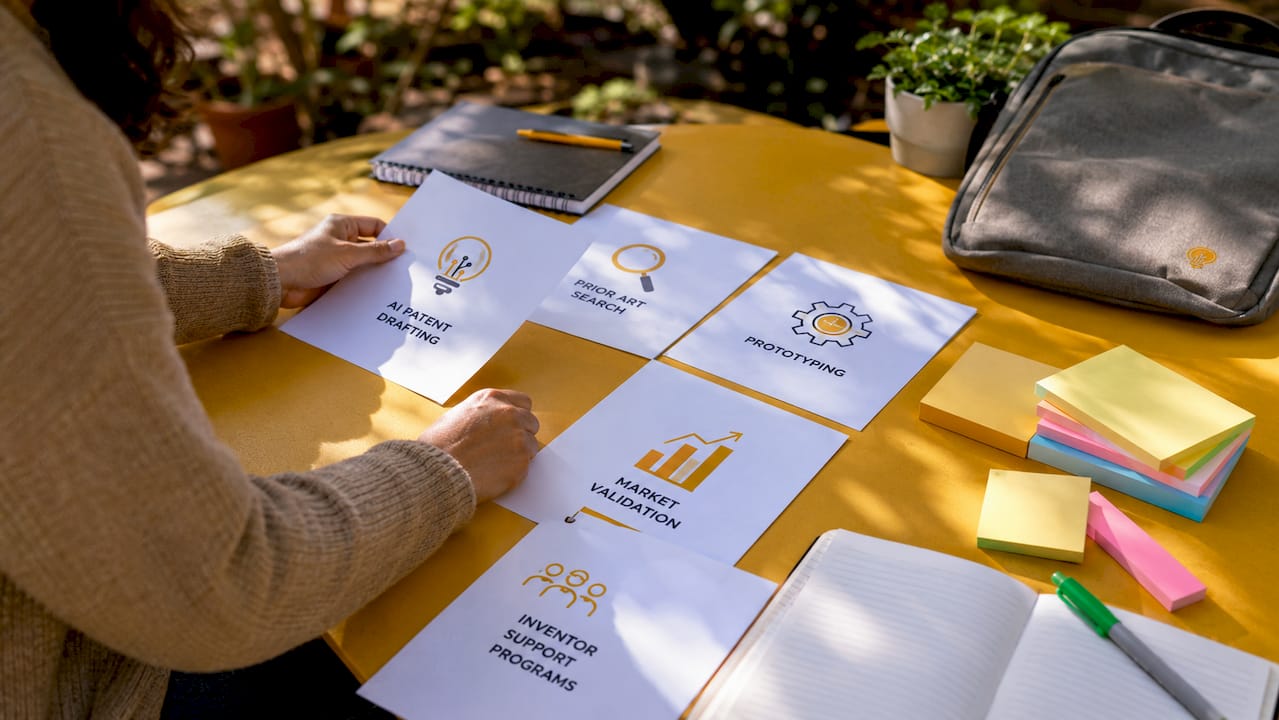
The five main categories are AI patent drafting tools, prior art search tools, prototyping resources, market validation platforms, and innovation management software. Each category solves a specific problem. Using them in sequence, rather than randomly, produces faster results and stronger patent applications.
2. AI-powered patent drafting tools
AI patent drafting tools generate structured patent language, claims, and technical descriptions from an inventor's plain-language input. They reduce the time and cost of preparing a patent application before an attorney ever reviews it.
Pricing varies widely by stage and need:
- Entry-level subscriptions start at $49/month, making professional-grade drafting accessible to first-time inventors.
- Premium enterprise tools reach approximately $775/user/month for teams with high-volume patent workflows.
- Mid-tier options sit between these extremes and typically include flowchart generation, claim structuring, and figure annotation.
The cost gap between entry-level and enterprise tools is significant. Most aspiring inventors need the entry-level tier to prepare an attorney-ready disclosure, not a fully filed patent. That distinction saves thousands of dollars.
Pro Tip: Use AI-guided scaffolding to organize your invention's technical components before your first attorney meeting. Structured disclosures speed up patent drafting and improve application quality.
3. Prior art search tools for independent inventors
Prior art search is the process of checking whether your invention already exists in published patents or literature. Skipping this step before filing wastes money and time.
Independent inventors can conduct free novelty searches using semantic AI tools before engaging a patent attorney. Tools like PQAI use natural language queries to surface relevant prior art across patent databases. This lets you refine your concept and confirm novelty without paying professional search fees upfront.
The USPTO also offers free support through its Patent Pro Bono Program. This program matches under-resourced inventors with volunteer patent practitioners and provides access to Patent and Trademark Resource Centers (PTRCs) for education and guidance. Eligibility is based on financial criteria, making it a genuine resource for inventors who cannot afford private counsel.
4. Prototyping tools and maker spaces
Prototyping transforms an abstract idea into a physical or digital model that can be tested, refined, and shown to investors. Without a prototype, most inventors struggle to communicate their concept clearly.
Key prototyping resources include:
- Maker spaces with 3D printers, laser cutters, and on-site mentors for hands-on builds
- Open-source hardware platforms like Arduino and Raspberry Pi for electronics prototyping
- Budget-friendly CAD software for digital modeling before committing to physical materials
- Incubators and accelerators that provide both equipment access and technical coaching
Maker spaces and incubators provide equipment and mentorship that most individual inventors cannot afford to replicate at home. The combination of physical tools and expert guidance accelerates the refinement process significantly. A working prototype also strengthens a patent application by demonstrating how the invention functions in practice.
For inventors who prefer digital-first prototyping, Inventifystudios offers an AI prototype generator that produces 3D concept models in minutes. You can review open-source prototyping options alongside AI-generated models to choose the right approach for your budget and timeline.
5. Innovation management and idea organization platforms
Innovation management platforms centralize the full invention workflow in one place. They replace disconnected spreadsheets and email threads with structured pipelines that track ideas from capture to execution.
These platforms connect idea generation to project execution, providing visibility across every stage and reducing the risk of missed opportunities. Key features to look for include:
| Feature | Why it matters |
|---|---|
| Configurable evaluation criteria | Lets you score ideas against your specific goals |
| Approval routing | Keeps decisions moving without manual follow-up |
| AI-powered analysis | Surfaces patterns and gaps across your idea pipeline |
| Collaboration tools | Connects inventors, advisors, and stakeholders in one view |
Pro Tip: Treat your invention as a structured disclosure from day one. Capturing problem, context, and motivation early creates the core narrative for your patent application and saves significant revision time later.
Self-guided invention platforms offer the same organizational benefits without the enterprise price tag. For solo inventors and small teams, they provide the structure of a full innovation management system at a fraction of the cost.
6. Market validation tools and crowdfunding platforms
Market validation tools test whether real customers want your invention before you invest heavily in manufacturing or full patent prosecution. Skipping validation is one of the most common and costly mistakes inventors make.
Digital twin technology is one of the most effective validation methods available. Digital twins can validate invention concepts with up to 85% accuracy, moving ideas from concept to validated model in weeks rather than months. That speed advantage reduces R&D risk before significant capital is committed.
Crowdfunding platforms serve a dual purpose for inventors:
- Capital generation: Raise funds to cover prototyping and patent costs
- Market signal: Real backers signal genuine demand, which attracts retailers and investors
- Product feedback: Backer comments reveal feature gaps and usability issues before launch
- Brand awareness: A successful campaign builds an audience before the product ships
Crowdfunding success signals market demand to retailers and investors beyond the capital raised. That signal carries weight in licensing negotiations and investor pitches. Treat your campaign comments as free product research, not just encouragement.
For a structured approach to testing your concept early, the invention validation steps guide covers AI simulation and digital twin methods in detail.
You can also validate your startup idea before committing to full R&D, using simulation tools that mirror the digital twin approach.
7. Inventor support programs and legal resources
Free and low-cost legal resources form a critical layer of the inventor toolkit. Most aspiring inventors underestimate how much free support is available before they need to pay for private counsel.
The USPTO's Patent Pro Bono Program connects financially under-resourced inventors with volunteer patent practitioners at no cost. PTRCs, located in libraries and universities across the country, offer free patent database access and one-on-one guidance. These programs exist specifically to lower the barrier between a good idea and a filed application.
Legitimate invention consultants add value through evaluation and resource connections, not guarantees. Consultants should focus on evaluation and realistic resource connections rather than promising patent approvals or commercial success. Any consultant who guarantees a patent grant or licensing deal is a red flag. The invention consulting alternatives guide covers how to identify credible support and avoid unreliable promises.
Key takeaways
The most effective inventor toolkit combines AI patent drafting, free prior art search, hands-on prototyping, digital validation, and centralized workflow management across every stage of the invention process.
| Point | Details |
|---|---|
| Start with prior art search | Use free semantic AI tools like PQAI before paying for professional patent searches. |
| Use AI drafting early | Entry-level AI patent tools start at $49/month and produce attorney-ready disclosures. |
| Validate before you build | Digital twins validate concepts with up to 85% accuracy in weeks, not months. |
| Centralize your workflow | Innovation management platforms replace spreadsheets and reduce missed opportunities. |
| Crowdfunding signals demand | Campaign backers provide market proof that attracts retailers and investors beyond capital raised. |
My take on building an inventor toolkit that actually works
I have watched inventors spend months and thousands of dollars in the wrong order. They hire a patent attorney before validating the concept. They build a physical prototype before checking prior art. They join an incubator before organizing their own idea clearly enough to explain it.
The sequence matters more than the tools themselves. Prior art search comes first, always. If your concept already exists in a published patent, nothing else in your toolkit matters. Free tools like PQAI make this step accessible to anyone with an internet connection. There is no excuse for skipping it.
The second mistake I see constantly is treating patent drafting as a final step rather than an ongoing document. Documenting problem, context, and motivation from the first day you have an idea creates the foundation of your patent narrative. By the time you engage an attorney, you hand them a structured disclosure instead of a napkin sketch. That difference cuts drafting time and attorney fees significantly.
On consultants: be skeptical of anyone who leads with success stories and vague promises. Legitimate support focuses on connecting you to the right resources at the right stage. The best consultants tell you what your invention lacks, not what it could become. That honesty is worth more than any guarantee.
Finally, do not underestimate free programs. The USPTO's Patent Pro Bono Program and PTRCs exist because Congress recognized that good ideas should not die because of financial barriers. Use them.
— Hua
Inventifystudios: organize and protect your invention from day one
Inventifystudios brings together the core tools aspiring inventors need in one place. The platform generates AI-powered 3D prototypes in minutes, assesses patentability, and produces provisional patent narratives without the cost of traditional consulting.
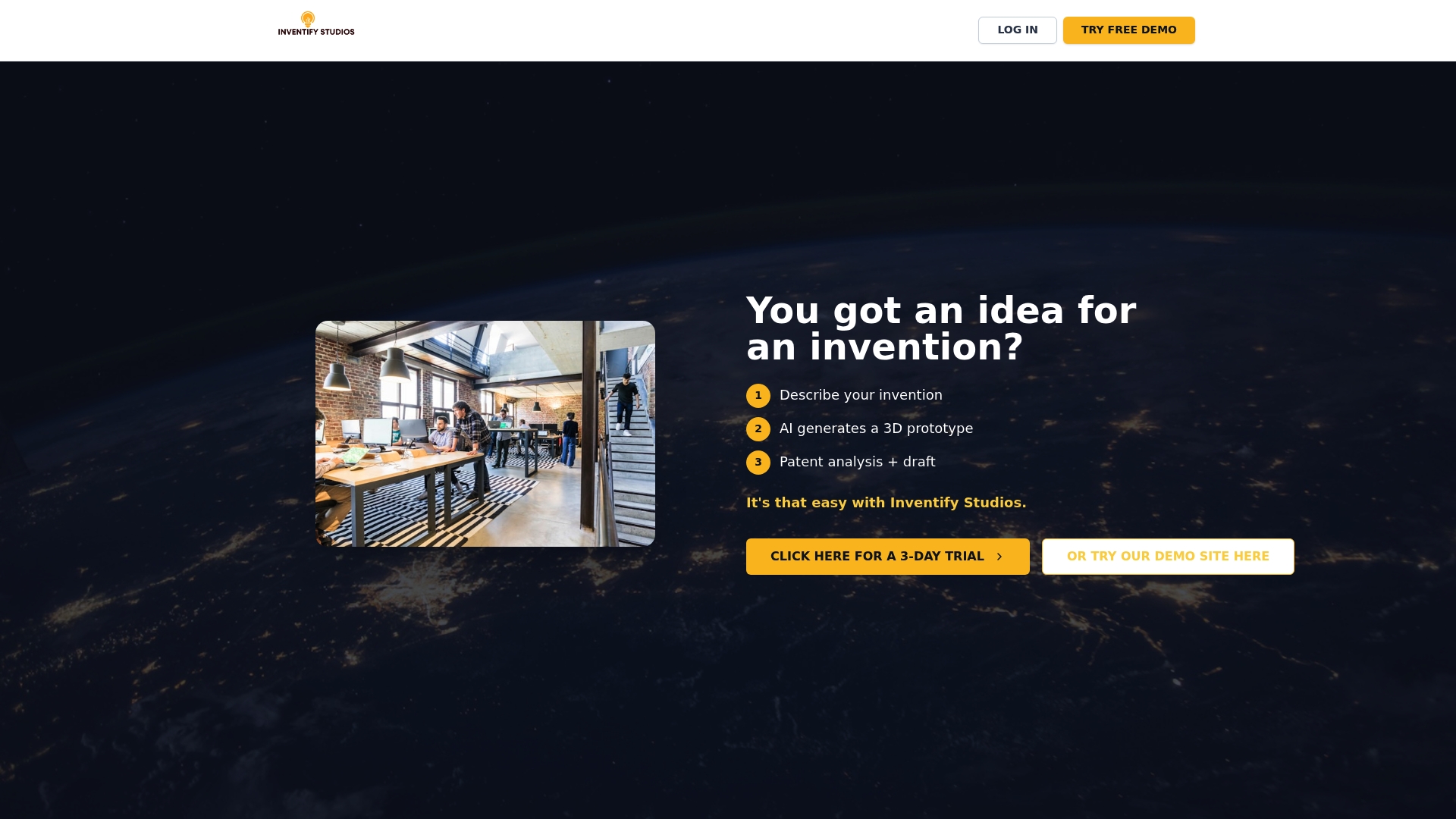
The Invention Detail platform is built for inventors at the earliest stage, when ideas are still forming and documentation feels overwhelming. You capture your invention's problem, context, and technical details in a guided format that produces a structured disclosure ready for patent review. If you are ready to move from idea to protected concept, the Inventifystudios Invention Detail platform gives you the structure and AI tools to do it efficiently and affordably.
FAQ
What are the main types of inventor support tools?
The main types are AI patent drafting tools, prior art search tools, prototyping resources, market validation platforms, and innovation management software. Each addresses a different stage of the invention lifecycle.
Are there free inventor resources available before hiring an attorney?
Yes. The USPTO's Patent Pro Bono Program matches under-resourced inventors with volunteer patent practitioners at no cost. Free semantic AI tools like PQAI also allow independent prior art searches before professional consultation.
How accurate are digital twins for invention validation?
Digital twins validate invention concepts with up to 85% accuracy, moving ideas from concept to validated model in weeks rather than months.
What should I look for in an innovation management platform?
Look for configurable evaluation criteria, approval routing, AI-powered analysis, and collaboration tools. These features replace disconnected spreadsheets and keep your invention pipeline moving without manual follow-up.
How do I avoid unreliable invention consultants?
Focus on consultants who offer evaluation and resource connections rather than guaranteed outcomes. Legitimate consultants provide design connections and pitch preparation but do not promise patent approvals or licensing deals.