

Invention protection without a law firm is achievable through the USPTO's self-filing system, provisional patent applications, and a set of intellectual property strategies that cost a fraction of traditional legal fees. Independent inventors can file patents without a lawyer using the official Patent Center portal, conduct free prior art searches, and claim Micro Entity status to cut filing costs significantly. Platforms like Inventifystudios add AI-powered patent analysis and prototype drafting to the mix, making the self patenting process more accessible than ever. This guide covers every step, from your first patent search to alternative IP strategies that work even when a patent is not the right fit.
What you need before starting invention protection without a law firm
The first requirement for any patent filing is novelty. Your invention must be new and nonobvious compared to everything already publicly known. That standard comes directly from USPTO examination criteria, and no amount of careful filing will save an application that fails it.
The best starting point is a thorough prior art search. USPTO Patent Public Search is free and covers U.S. patents going back decades. Search foreign patent databases and technical journals too, because prior art anywhere in the world can block your application. Skipping this step is the single most common reason self-filed applications fail early.

After confirming novelty, register for a USPTO Patent Center account. This is the official electronic filing portal for all patent applications. You will also need to determine your entity status before you pay a single fee.
Entity status determines how much you pay. Micro Entity status requires specific certification forms (PTO/SB/15A or 15B) and cuts USPTO fees by the largest margin available to individual inventors. Small Entity status offers a moderate reduction. Standard fees apply to large corporations. Choosing the wrong status, or forgetting to certify at all, means you overpay from day one.
| Prerequisite | Tool or Standard | Purpose |
|---|---|---|
| Prior art search | USPTO Patent Public Search | Confirm novelty and nonobviousness |
| Portal registration | USPTO Patent Center | Electronic filing access |
| Entity status certification | Forms PTO/SB/15A or 15B | Reduce filing fees |
| Technical specification | Written description with drawings | Core of the patent application |
| Cover sheet | Form PTO/SB/16 | Required for provisional applications |
Pro Tip: Certify your Micro Entity status at the time of filing, not after. Submitting the certification form late can result in fee overpayment that is difficult to recover.
How to file a provisional patent application step by step
A provisional patent application, or PPA, is the standard entry point for DIY patent protection. It does not require formal legal claims, an oath or declaration, or an information disclosure statement at the time of filing. That simplicity is what makes it the right first move for most independent inventors.
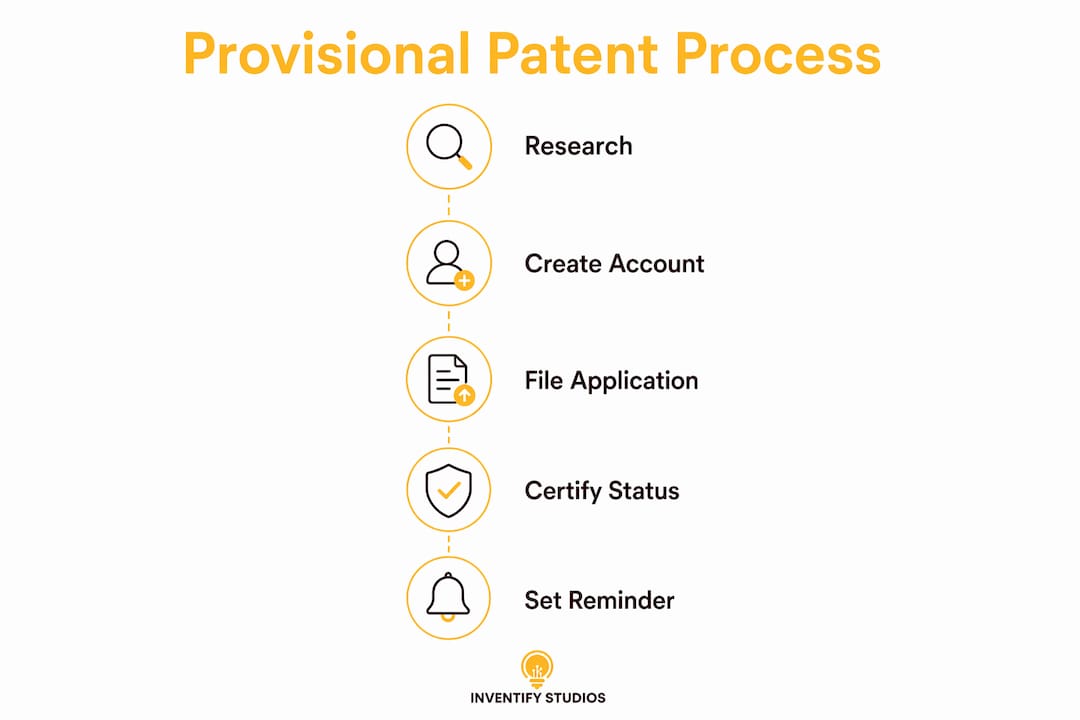
The 12-month patent pending window a PPA creates gives you time to test the market, refine the invention, and decide whether to invest in a full non-provisional application. That window is fixed. Missing it means losing your priority date.
Here is the complete filing sequence using USPTO Patent Center:
- Prepare your technical specification. Write a detailed description of how your invention works. Include every feature, variation, and use case. Vague descriptions create weak protection.
- Create drawings or diagrams. Visual representations are not always legally required, but they strengthen your application and clarify complex mechanisms.
- Complete cover sheet PTO/SB/16. This form captures inventor names, invention title, and correspondence address.
- Convert all documents to PDF. USPTO Patent Center requires PDF format for all uploaded files.
- Create or log in to your Patent Center account. Navigate to the provisional application filing option.
- Enter bibliographic information. Fill in the title, inventor details, and entity status directly in the portal.
- Upload your PDF files. Attach the specification, drawings, and cover sheet separately as labeled documents.
- Submit your Micro Entity or Small Entity certification form. Include PTO/SB/15A or 15B at this stage.
- Pay the filing fee. Fee amounts vary by entity status and are listed on the USPTO fee schedule page.
- Download and save your electronic receipt. This receipt confirms your filing date and application number.
Pro Tip: Set a calendar reminder for 11 months after your filing date. You need time to prepare a non-provisional application before the 12-month deadline expires.
| Feature | Provisional application | Non-provisional application |
|---|---|---|
| Legal claims required | No | Yes |
| Oath or declaration required | No | Yes |
| Patent pending status | Yes, 12 months | Yes, until decision |
| Examination by USPTO | No | Yes |
| Can lead to patent grant | Only via non-provisional conversion | Yes |
| Complexity for self-filers | Moderate | High |
The provisional application is a technical document most inventors can prepare independently. The non-provisional process is a different challenge entirely.
Common pitfalls when self-filing a patent application
Missing the 12-month conversion deadline is the most damaging error in the self patenting process. A lapsed provisional application cannot be revived. Your priority date disappears, and any public disclosure you made during that period becomes prior art against you.
Inadequate technical descriptions are the second most common failure point. A specification that does not fully describe every feature of the invention leaves gaps that competitors can exploit. Courts interpret patent scope based on what the specification actually says, not what the inventor intended.
Watch for these frequent mistakes:
- Forgetting Micro Entity certification. Submitting without the form means paying standard fees when you qualify for a significant reduction.
- Incorrect PDF formatting. USPTO Patent Center rejects files that do not meet its technical specifications.
- Missing inventor names. Every person who contributed to the invention must be listed. Omitting a co-inventor can invalidate the patent.
- Disclosing the invention publicly before filing. Public disclosure before your filing date can destroy novelty in most countries outside the U.S.
- Skipping drawings. Even when not strictly required, missing visuals often result in office actions requesting clarification.
- Assuming a provisional equals full protection. A PPA creates pending status only. It does not grant any patent rights on its own.
The non-provisional stage is where self-filing becomes genuinely risky. Drafting legal claims and responding to USPTO office actions requires technical and legal precision that is difficult to achieve without professional training. At that stage, a registered patent agent, who is not a full attorney but is licensed to practice before the USPTO, is often a cost-effective middle ground.
Pro Tip: A registered patent agent costs less than a patent attorney and can handle prosecution of your non-provisional application. Search the USPTO's registered practitioner database to find one.
What are the alternative IP strategies for protecting inventions?
Patents are not the only tool for protecting ideas without lawyers. Trade secrets, NDAs, trademarks, and copyright each serve a different function in a complete intellectual property strategy.
Trade secrets and NDAs
A trade secret protects any confidential business information that gives you a competitive edge. The formula for Coca-Cola is the classic example. The requirement is genuine secrecy. You must actively limit who knows the information and how it is shared. Once the secret is public, the protection is gone.
Non-Disclosure Agreements are the practical enforcement tool for trade secrets. Before sharing your invention concept with a manufacturer, investor, or potential partner, get a signed NDA. The agreement creates a legal record of the confidentiality obligation. Without it, proving a breach is nearly impossible.
Trademarks and copyright
Trademarks protect your brand identity, not the invention itself. A trademark on your product name or logo prevents competitors from copying your market presence. The key rule: file trademarks only after establishing genuine use in commerce. Filing too early wastes fees and creates administrative complications. The recommended sequence is to form your LLC, create a DBA if needed, launch your website, establish actual sales, and then file.
Copyright protection is automatic the moment you create an original work. Software code, product documentation, and marketing materials are all covered from creation. Formal copyright registration is worth pursuing only for assets significant enough to justify potential litigation costs.
Aligning your IP strategy with your business goals matters more than collecting every available protection. A hardware inventor with a patentable mechanism needs a different approach than a software founder whose main asset is proprietary code.
Pro Tip: Combine a provisional patent with an NDA during early-stage conversations. The PPA gives you a filing date. The NDA controls who knows the details. Together, they cover the two biggest early risks.
Key takeaways
Invention protection without a law firm is achievable when inventors combine USPTO self-filing tools, Micro Entity fee reductions, and layered IP strategies like trade secrets and NDAs.
| Point | Details |
|---|---|
| Start with a patent search | Use USPTO Patent Public Search for free to confirm novelty before filing anything. |
| File a provisional application first | A PPA creates 12 months of patent pending status without requiring legal claims. |
| Certify Micro Entity status at filing | Submit PTO/SB/15A or 15B at the time of filing to avoid paying excess fees. |
| Use NDAs alongside patent filings | An NDA controls disclosure risk during the period before your patent is granted. |
| Get professional help for non-provisional filing | Drafting legal claims and responding to office actions requires expert precision. |
My honest take on the DIY patent process
I have watched hundreds of inventors approach the self-filing process with the right instincts but the wrong expectations. The provisional patent application is genuinely manageable for most people who are willing to read the USPTO guidelines carefully and document their invention thoroughly. That part is not the problem.
The problem is the 12-month window. Inventors file a PPA, feel protected, and then lose track of the deadline while building their product. When they finally circle back, the window has closed. That single mistake erases the entire value of the original filing.
My advice is direct: treat the provisional as a starting gun, not a finish line. Use the 12 months to validate your market, refine your design, and decide whether the invention warrants the cost and complexity of a non-provisional application. If it does, bring in a registered patent agent for that stage. The risks of self-drafting a non-provisional are real, and a weak patent is often worse than no patent because it gives false confidence.
Inventifystudios makes the early stages significantly more manageable. The AI-powered patent analysis and prototype drafting tools help inventors build a stronger technical foundation before they ever touch the USPTO portal. That preparation is what separates a solid provisional application from one that creates problems later.
The DIY approach works. It requires patience, documentation discipline, and knowing exactly when to ask for help.
— Hua
How Inventifystudios supports independent inventors
Independent inventors who want to protect their ideas without paying law firm rates have a direct path forward with Inventifystudios.
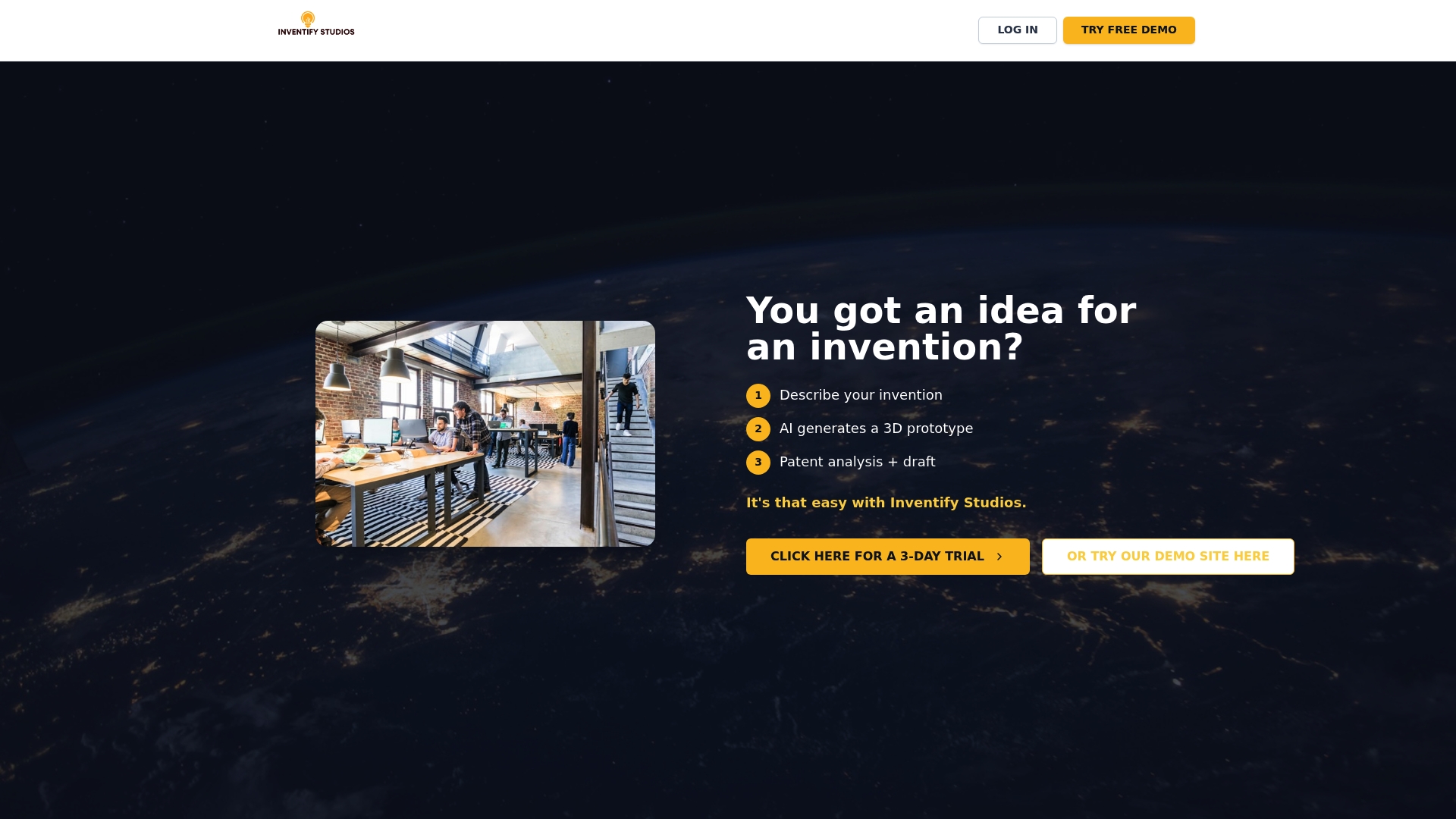
Inventifystudios offers AI-powered tools that take inventors from raw concept to patent-ready documentation. The Create Invention service generates 3D prototypes and patentability assessments in minutes, giving inventors a clear picture of where their idea stands before they file anything. The Invention Detail page provides tailored drafting insights for provisional patent narratives, so your technical specification is built on a solid foundation. For inventors following the DIY patent strategy outlined here, Inventifystudios removes the guesswork from the preparation stage and puts you in the best possible position before you open the USPTO Patent Center portal.
FAQ
Can I file a patent without a lawyer?
Yes. The USPTO allows inventors to file patent applications without legal representation, a status called "pro se." Provisional applications are the most practical starting point for self-filers.
What is a provisional patent application?
A provisional patent application is a simplified filing that grants 12 months of patent pending status without requiring formal legal claims or an oath. It must be followed by a non-provisional application within 12 months to pursue an actual patent grant.
How do I reduce USPTO filing fees as an independent inventor?
Qualifying inventors can claim Micro Entity status by submitting form PTO/SB/15A or 15B at the time of filing. This certification provides the largest available fee reduction for individual inventors.
When should I hire a patent agent instead of filing alone?
Hire a registered patent agent when you move from a provisional to a non-provisional application. Drafting legal claims and responding to USPTO office actions requires precision that is difficult to achieve without professional training.
What IP protection works without filing a patent?
Trade secrets, Non-Disclosure Agreements, trademarks, and copyright each protect different aspects of an invention or business. NDAs are the most practical immediate tool for inventors sharing ideas with potential partners before a patent is filed.