

If your invention is easy to reverse engineer once it hits the market, patent it. If it's a process, formula, or dataset that stays hidden inside your operations, keep it a trade secret. Most decisions come down to four factors: how easily someone can reverse engineer your invention, how easily you can detect if someone stole it, whether your organization can actually maintain secrecy, and how long the invention will stay commercially relevant compared to a patent's term.
A device with visible mechanical parts almost always favors a patent, because anyone can take it apart and copy it. An internal algorithm, a manufacturing recipe, or a proprietary dataset usually favors a trade secret, since detectability and reverse-engineerability drive the entire calculus. Many inventors land somewhere in between and end up protecting different pieces of the same invention with different tools.
Pro Tip: Before you file anything, ask whether a competitor could learn your invention's secret sauce just by buying and studying your product. If yes, a trade secret won't survive contact with the market, so a patent is likely your only real option.
Key Takeaways
The right protection strategy depends on scoring reverse-engineerability, detectability, secrecy capability, and lifecycle alignment, then choosing patent, trade secret, or a hybrid split accordingly.
| Point | Details |
|---|---|
| Run the four-factor test | Score reverse-engineerability, detectability, secrecy capability, and lifecycle on a 0 to 3 scale each. |
| Patents trade secrecy for exclusivity | You get about 20 years of protection in exchange for fully disclosing how the invention works. |
| Trade secrets require proof | Courts enforce them only when you can show reasonable measures like NDAs and access controls. |
| Hybrid protection is common | Patent visible features and keep internal processes or data as trade secrets when both apply. |
| Inventify Studios supports execution | Its patentability analysis and documentation tools help inventors act on whichever route the four-factor test points toward. |
This article is general information, not a substitute for advice from a qualified lawyer. Consult a qualified legal professional about your own circumstances before acting on anything here.
Table of Contents
- What Is a Patent and How Does It Work?
- What Is a Trade Secret and What Qualifies?
- Patent vs Trade Secret: Side-by-Side Comparison
- How Do You Decide Between a Patent and a Trade Secret?
- If You Decide to Patent: What Happens Next
- If You Decide on Secrecy: How Do You Make It Enforceable?
- When Should You Combine Both Patents and Trade Secrets?
- Sources
What Is a Patent and How Does It Work?
A patent grants you an exclusive right to stop others from making, using, or selling your invention, in exchange for publicly disclosing exactly how it works. That trade, exclusivity for disclosure, is the entire deal. A utility patent typically runs for roughly 20 years from the filing date, after which the invention enters the public domain and anyone can use it freely.
To qualify, an invention generally needs to be novel, non-obvious over existing solutions, and described clearly enough that someone skilled in the field could recreate it. Getting there takes time and money: expect months to years of examination at the USPTO, with legal and filing costs that scale with claim complexity and how many countries you file in.
Patents tend to fit inventions like these best:
- Mechanical devices or products with externally visible features
- Safety-critical technology that regulators or customers need to verify
- Platform technology you plan to license to other companies
- Chemical compounds or formulations that can be reverse-engineered through lab analysis
What Is a Trade Secret and What Qualifies?
A trade secret is commercially valuable information you keep confidential through deliberate, provable effort. There's no application, no government office, no certificate. You earn protection simply by having something valuable and guarding it well, which is both trade secrets' greatest strength and their biggest liability.
Three things typically have to be true for information to qualify: it derives value from not being publicly known, it isn't something competitors could easily discover on their own, and you've taken reasonable measures to keep it confidential. Miss that third piece and courts often won't enforce your claim, no matter how valuable the secret actually is.
Intent to keep something secret means nothing on its own. Secrecy is lost the moment information becomes public, or when a competitor lawfully discovers it through independent research or reverse engineering.
Strong trade-secret candidates include:
- Proprietary formulas or recipes (think Coca-Cola's syrup formula)
- Internal algorithms or model parameters that never ship to the customer
- Manufacturing processes hidden inside your factory walls
- Customer or supplier datasets compiled through years of operations
Patent vs Trade Secret: Side-by-Side Comparison
Here's how the two protections stack up across the dimensions that actually drive a decision. Neither option wins across the board, and that's the whole point of running the comparison before you commit resources to either one.
| Factor | Patent | Trade Secret |
|---|---|---|
| Duration | About 20 years from filing | Indefinite, as long as secrecy holds |
| Disclosure requirement | Full public disclosure required | None; confidentiality is the point |
| Enforceability / remedies | Statutory infringement claims, injunctions, damages | Requires proving misappropriation and your own protective steps |
| Ease of reverse engineering | Assumes it will happen; disclosure makes it moot | Fatal to protection if it happens |
| Detectability of infringement | Easier when features are visible in the market | Hard; violations often go unnoticed for years |
| Typical cost & time to obtain | High upfront cost, months to years to grant | Low upfront cost, ongoing operational cost |
| Industry suitability | Hardware, pharma, consumer products | Software internals, formulas, data, processes |
| Business lifecycle alignment | Best for inventions with long commercial life | Best for fast-moving tech that would outlive a patent anyway |
A few patterns jump out once you lay the columns side by side:
- Anything visible or testable in the finished product leans patent, because secrecy was never realistic anyway.
- Anything that lives inside your walls, servers, or supply chain leans trade secret, since disclosure would destroy its only source of value.
- Cost structure differs fundamentally: patents front-load expense into filing and prosecution, while trade secrets spread cost across ongoing operational controls.
None of this locks you into an either/or choice. Plenty of inventions get split protection, and that hybrid pattern shows up again later in this guide.
How Do You Decide Between a Patent and a Trade Secret?
Score your invention on four factors, each from 0 to 3, where 0 means "strongly favors trade secret" and 3 means "strongly favors patent." This mirrors the four-factor framework many IP strategists use with startup clients.
- Reverse-engineerability. Could a competitor figure out how your invention works just by studying the finished product? High reverse-engineerability scores a 3.
- Detectability. If someone copied you, would you actually know? Easy detection scores a 3; a hidden internal process that's nearly impossible to catch scores a 0.
- Secrecy capability. Does your team have the discipline, contracts, and systems to keep something confidential for years? Strong internal controls score a 3; a leaky, fast-growing startup with contractor turnover scores closer to 0.
- Lifecycle alignment. Will this invention still matter commercially in 15 to 20 years? If yes, a patent's term fits well and scores a 3; if the tech will be obsolete in two years, trade secret territory scores lower and patenting may waste money.
Add the four scores. A total of 8 to 12 usually points toward a patent. A total of 0 to 4 usually points toward a trade secret. Scores in between often signal a hybrid split.
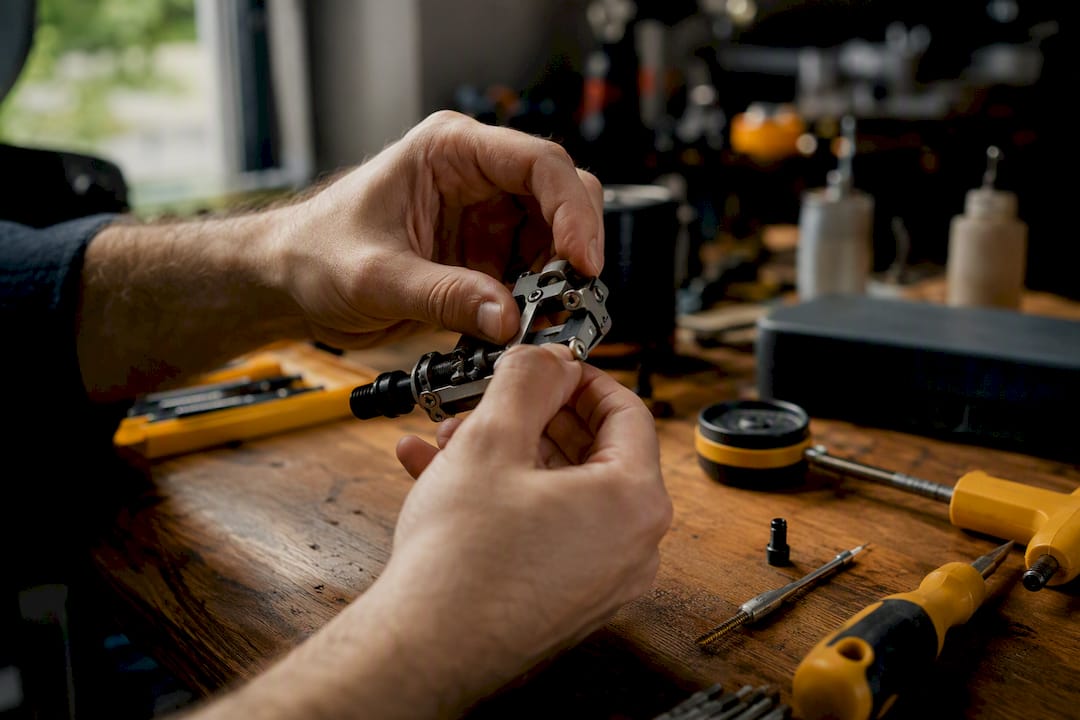
Hardware example: A redesigned bicycle pedal with a visible locking mechanism scores high on reverse-engineerability and detectability, so patent it.
Software/AI example: A proprietary ranking algorithm running on your servers scores low on both, since no one can see the code, so keep it a trade secret.
Manufacturing example: A novel heat-treatment process inside a factory that produces a visibly different but reverse-engineerable final product often lands in hybrid territory.
Before locking in your score, run three quick checks: try to reverse engineer your own product the way a competitor would, ask whether you'd realistically catch a copycat within a year, and audit whether your NDAs and access controls could survive a smart tech investment assessment.
If You Decide to Patent: What Happens Next
Once the four-factor test points you toward a patent, the process follows a fairly predictable sequence.
- Document the invention thoroughly, including sketches, prototypes, and dated notes.
- Run a prior-art search to confirm novelty before spending money on drafting.
- File a provisional application to lock in a filing date affordably while you refine the invention.
- Draft and file the full utility application with detailed claims.
- Respond to USPTO office actions during prosecution, which typically stretches over one to three years.
Budget for provisional filings in the low hundreds of dollars in government fees, with utility filing, prosecution, and attorney costs climbing into the thousands depending on complexity and how many claims you pursue.
Pro Tip: While your patent application is pending, keep your manufacturing tweaks, calibration settings, and supplier relationships out of the published filing. Disclose only what's legally required to support your claims, and hold the rest back as trade secret know-how that never has to become public.
If You Decide on Secrecy: How Do You Make It Enforceable?
A trade secret with no paper trail is nearly impossible to defend in court, since reasonable efforts are the legal foundation of the entire protection. Build the following into your operations:
- Require signed NDAs from every employee, contractor, and vendor before they see sensitive information.
- Restrict access on a need-to-know basis, using role-based permissions rather than open file sharing.
- Mark confidential documents clearly, and maintain version logs showing who accessed what and when.
- Train employees explicitly on what counts as confidential, since ignorance undermines your legal position later.
- Segment your network and use dedicated secrets management tools for code, formulas, or datasets.
- Consider clean-room manufacturing splits so no single supplier sees the entire process.
The WIPO guide to trade secret management recommends treating this as an ongoing program, not a one-time policy, complete with classification systems and periodic audits.
Pro Tip: Keep dated records of every access-control change, training session, and NDA signature. If misappropriation happens, that paper trail is often the difference between winning and losing your case.
Reverse engineering, independent development, and whistleblower protections all sit outside your control, and no amount of internal discipline can stop them.
When Should You Combine Both Patents and Trade Secrets?
Splitting protection by component is common, especially for startups managing tight budgets. A hardware device might patent the external mechanism while keeping internal calibration settings a trade secret. A software product might patent a distinctive integration method while keeping model weights and training data locked away entirely.
- Patent whatever a competitor could see, touch, or test after purchase.
- Keep secret whatever only exists inside your code, servers, or factory floor.
- Document the split in writing so your legal counsel and engineering team agree on what gets disclosed and what stays confidential.
This blended approach is often the most resilient strategy for companies whose products combine visible hardware with invisible software or process advantages.
How We Typically Advise Inventors on This Decision
Start by mapping every asset your invention touches, then run the four-factor test on each piece separately before deciding anything. Hybrid protection wins more often than a single clean answer.
Get Help Executing Your Protection Strategy
Once you know whether you're headed toward a patent, a trade secret, or a hybrid split, execution is where most inventors stall out. Inventify Studios replaces expensive early-stage consulting with AI tools built for exactly this moment: patentability analysis that flags novelty issues before you spend on attorneys, provisional patent drafting guidance that turns your notes into a filing-ready narrative, and documentation management that builds the access logs and version history your trade secrets need to hold up under scrutiny.
If you're still deciding which route fits your invention, start with a prototype and analysis on the Invention Detail page and get a clearer, faster answer than a first consultation call would give you.
Sources
- Trade secrets IP toolkit — USPTO
- WIPO guide to trade secrets and innovation — Part IV: Trade secret management
- Patent vs. trade secret strategy: Four-factor decision framework (IPWatchdog)