

A bootstrapped inventor strategy is defined as the practice of developing and growing an invention using only personal funds and early operating revenues, with no outside investors involved. This self-funded inventor approach preserves 100% equity ownership and avoids giving up the 10–25% equity typical in seed rounds. The industry term for this practice is "bootstrapping," borrowed from entrepreneurship, where it describes building something from nothing using your own resources. Inventifystudios was built with this type of inventor in mind, offering AI-powered tools that make the bootstrapping invention strategy practical and affordable for first-time creators and seasoned innovators alike.
What is bootstrapped inventor strategy and why does it matter?
Bootstrapping is the process of developing an invention using exclusively personal capital and early revenue, without loans, venture capital, or sponsorship. That definition matters because it shapes every decision you make, from how you prototype to how you protect your idea. You stay in control. You own every percentage of what you build.
The bootstrapped entrepreneur mindset differs sharply from the funded startup model. Funded inventors often trade equity for speed. Bootstrapped inventors trade speed for ownership. That tradeoff is not a weakness. It forces you to validate your idea with real customers before spending serious money, which is the single most effective way to avoid building something nobody wants.
Inventifystudios supports this approach directly. The platform provides AI-generated prototypes, patentability analysis, and provisional patent drafting at a fraction of traditional consulting costs. For inventors working with limited personal capital, that kind of cost compression changes what is possible.

How does bootstrapping benefit independent inventors compared to traditional funding?
The core benefit of a self-funded inventor approach is ownership. When you bootstrap, you keep every point of equity. External funding typically costs you 10–25% in a seed round, and that percentage compounds as you raise more capital. Bootstrapping eliminates that cost entirely.
Beyond ownership, bootstrapping delivers four concrete advantages:
- Full creative control. No investor board approves your product direction. You decide what to build, when to pivot, and how to price.
- Forced market validation. Because your money is finite, you test demand early. Early validation is the most reliable way to reduce the risk of building a product no one will buy.
- Fiscal discipline. Spending your own savings makes every dollar feel real. That discipline produces leaner operations and smarter spending decisions.
- No debt obligation. Unlike loans, bootstrapped capital carries no repayment schedule. You grow at the pace your revenue supports.
The downside is slower growth. Without outside capital, you scale only as fast as your cash flow allows. That constraint is real, but it is also manageable with the right tools and mindset.
Pro Tip: Before spending a dollar on manufacturing or legal fees, run a product validation exercise. Confirm that real customers will pay for your invention before you commit personal funds to building it.
What are the practical steps to implement a self-funded invention approach?
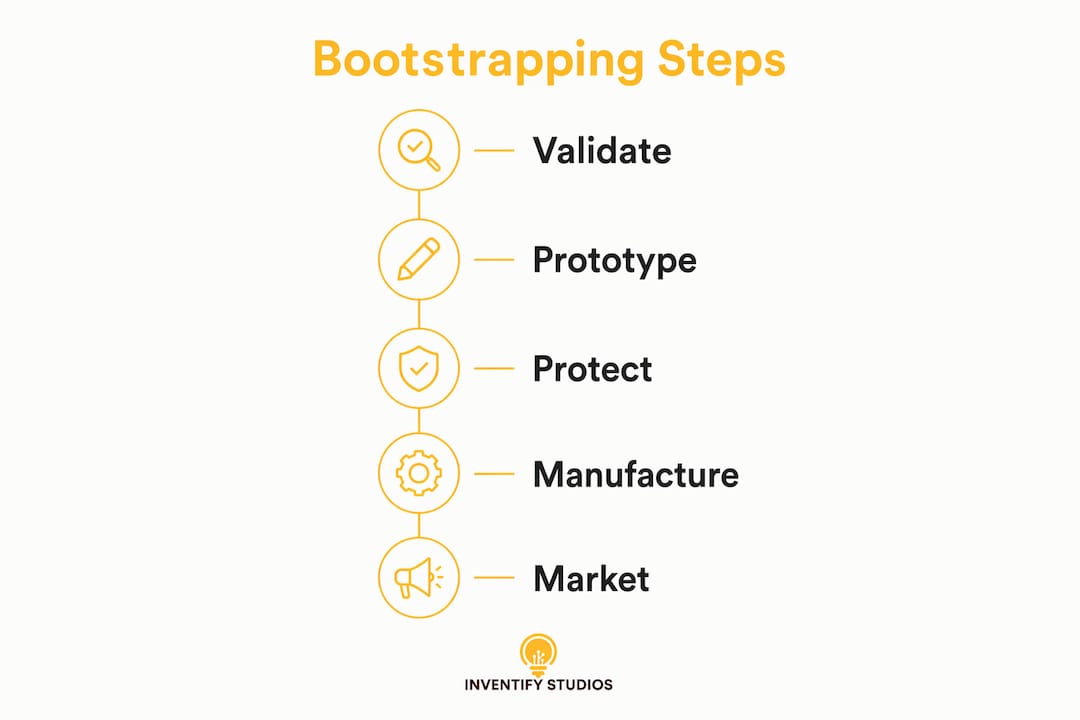
Implementing a bootstrapping invention strategy requires a specific sequence of decisions. Skipping steps wastes money. Following them builds momentum.
- Start with an MVP, not a finished product. Shifting from "perfect product" to minimum viable product (MVP) reduces R&D costs by 40–60% and gets your idea in front of customers faster. Build only the features that solve the core problem.
- Use AI-powered design tools for prototyping. AI and modular prototyping cut costs and accelerate iteration speed. Inventifystudios generates 3D prototypes in minutes, replacing weeks of expensive design work.
- Generate early cash flow through pre-orders or pilot sales. Starting small-scale production and reinvesting early revenue funds your next iteration without debt. This model allows gradual scaling over 12–24 months based on validated demand.
- Cut overhead by 30% or more. Strict fiscal discipline through shared tools, AI design resources, and modular prototyping extends your runway by 6–12 months without borrowing. Avoid expensive consultants until revenue justifies the cost.
- Treat your invention like a business from day one. Prioritize revenue-generating activities like early sales and pre-orders over perfecting aesthetics. An invention that earns money funds its own development.
Pro Tip: Use invention validation steps to confirm market demand before committing to manufacturing. Validation costs almost nothing compared to producing inventory that does not sell.
How can bootstrapped inventors protect their inventions cost-effectively?
Intellectual property protection is the area where bootstrapped inventors most often overspend too early. Full utility patent prosecution costs $5,000–$15,000 or more. That is a significant portion of a personal budget, especially before you have confirmed that your invention has a market.
The practical solution is the provisional patent application. Provisional patents provide a "patent pending" status for 12 months at a fraction of the cost of a full utility patent. That 12-month window gives you time to validate demand, generate early revenue, and decide whether full prosecution is worth the investment.
Here is how to approach IP protection on a bootstrapped budget:
- File a provisional application first. It secures your priority date without triggering the full prosecution timeline or cost.
- Use self-guided platforms for drafting. Inventifystudios provides provisional patent drafting insights that reduce dependence on expensive law firms. Protecting your invention without a law firm is now a realistic option.
- Delay full prosecution until product-market fit is confirmed. Filing a utility patent before you know your invention sells is a common and costly mistake.
- Document everything from the start. Dated records of your invention process support your priority claim and cost nothing.
| Protection stage | Tool | Approximate cost |
|---|---|---|
| Priority date secured | Provisional patent application | Low (DIY or platform-assisted) |
| Patent drafting guidance | AI-assisted drafting platforms | Fraction of law firm fees |
| Full utility patent | Attorney-filed utility application | $5,000–$15,000+ |
| Ongoing IP strategy | Self-guided review and iteration | Minimal |
Balancing low-cost patent protections with iterative development is the defining skill of a successful bootstrapped inventor. Commit to IP spending only when your market has validated the idea.
What common pitfalls should bootstrapped inventors avoid?
The most expensive bootstrapping mistake is spending limited capital on legal or manufacturing polish before confirming that customers will pay. A revenue-first mindset is not optional. It is the financial foundation of every sustainable self-funded invention.
These are the pitfalls that derail bootstrapped inventors most often:
- "Perfect product" syndrome. Waiting until your invention is flawless before showing it to customers burns time and money. Ship the MVP, collect feedback, and improve from there.
- Premature legal spending. Filing a full utility patent before market validation can consume your entire budget. Use provisional applications as a bridge.
- Overextending personal credit. Borrowing against personal credit cards or home equity to fund an unvalidated idea creates financial risk that no invention justifies at the early stage.
- Ignoring customer demand signals. Building what you think is great rather than what customers confirm they need is the fastest path to an abandoned project.
- Skipping cost-saving tools. AI-powered design tools and modular prototyping exist specifically to extend your runway. Not using them is leaving money on the table.
The inventors who succeed with bootstrapping share one habit: they treat every dollar as a vote on whether the idea deserves more investment. That discipline separates funded projects from abandoned ones.
Key Takeaways
A bootstrapped inventor strategy works because it forces early market validation, preserves full ownership, and builds fiscal discipline that funded inventors rarely develop.
| Point | Details |
|---|---|
| Preserve full equity | Bootstrapping avoids the 10–25% equity loss common in seed funding rounds. |
| Validate before spending | Confirm customer demand before committing to manufacturing or full patent prosecution. |
| Use provisional patents | A provisional application secures priority for 12 months at a fraction of utility patent costs. |
| Build an MVP first | Focusing on core features reduces R&D costs by 40–60% and accelerates time to market. |
| Use AI tools to extend runway | AI-powered prototyping and modular design cut overhead and speed up product iteration. |
Why patience is the real bootstrapping skill
I have worked with inventors at every funding level, and the ones who bootstrap successfully share one trait that has nothing to do with money. They are patient in a very specific way. They are not passive. They move fast on validation and slow on spending. That combination is harder to maintain than it sounds.
The inventors I have seen struggle most are the ones who fall in love with their idea before the market confirms it. They spend $8,000 on a utility patent for a product that has never been tested with a real buyer. They commission beautiful packaging before they have a single sale. That is not dedication. That is expensive optimism.
What actually works is treating every early dollar as a test. Build the simplest version. Put it in front of real people. Listen to what they say and what they do not say. Then spend based on what you learn, not what you believe. The inventors who embrace that process end up with products that sell, IP that is worth protecting, and enough runway to keep going.
The tools available in 2026 make this easier than it has ever been. AI-generated prototypes, provisional patent drafting platforms, and early-stage patent strategy guides have removed barriers that used to require a law firm and a product design agency. The bootstrapped inventor today has real advantages. Use them deliberately.
— Hua
Inventifystudios: built for the bootstrapped inventor
Aspiring inventors who want to develop and protect their ideas without high upfront costs now have a direct path forward.
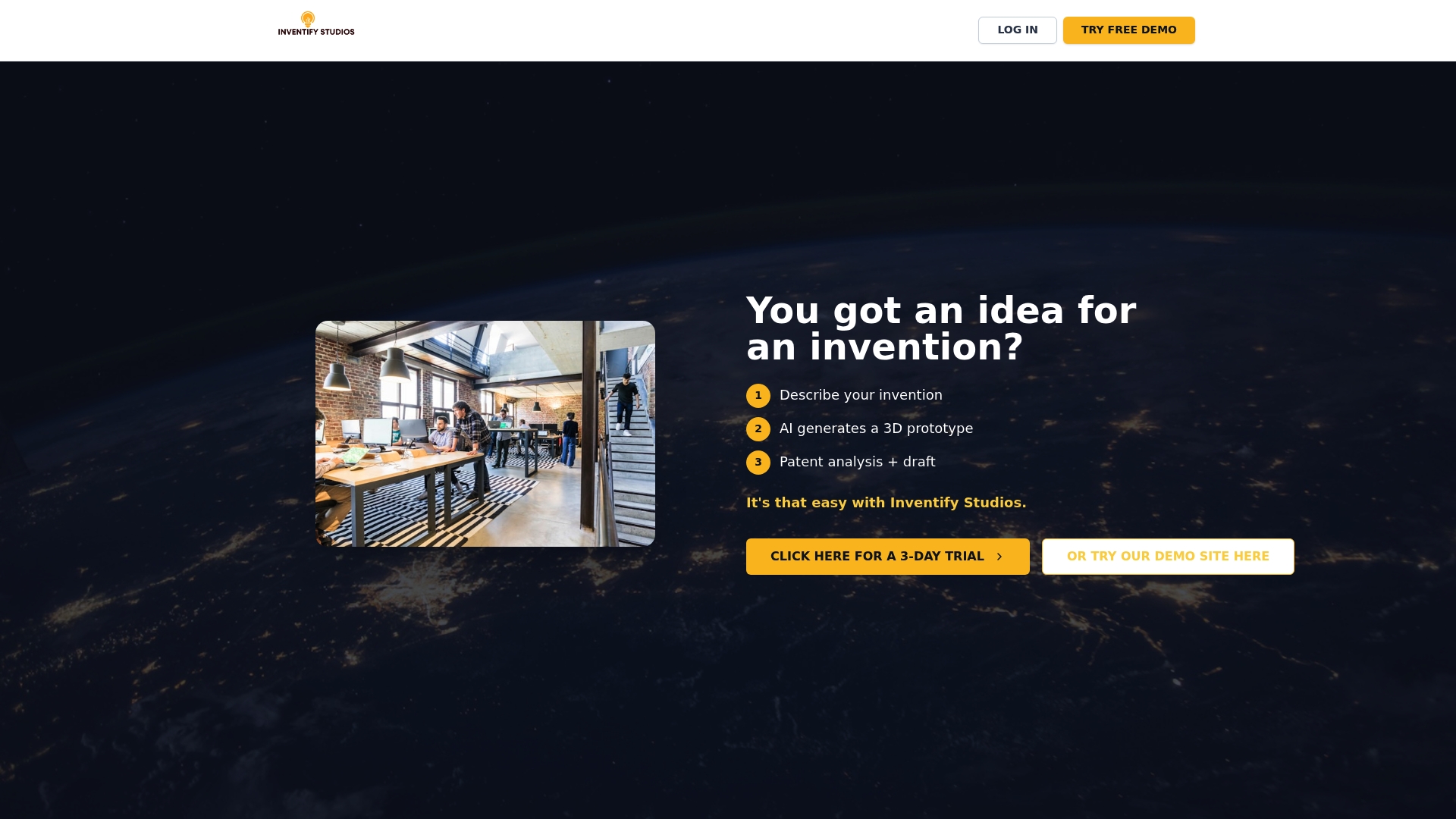
Inventifystudios combines AI-powered prototyping, patentability analysis, and provisional patent drafting in one platform. You can generate a 3D prototype in minutes, assess whether your idea is patentable, and get drafting guidance for a provisional application, all without hiring a consultant or a law firm. The platform is built specifically for self-funded inventors who need professional-grade tools at a price that fits a personal budget. Visit the Inventifystudios invention platform to see how it supports every stage of the bootstrapped development process, from first concept to protected product.
FAQ
What is a bootstrapped inventor strategy?
A bootstrapped inventor strategy is the practice of developing an invention using only personal savings and early operating revenues, without outside investors or loans. It preserves full equity and forces early market validation.
How does bootstrapping differ from seeking investor funding?
Bootstrapping keeps 100% ownership with the inventor, while investor funding typically costs 10–25% equity in a seed round. Bootstrapping grows slower but avoids equity dilution and investor control.
What is a provisional patent and why do bootstrapped inventors use it?
A provisional patent application secures a "patent pending" status for 12 months at low cost, giving inventors time to validate demand before committing to full utility patent costs of $5,000–$15,000 or more.
What does MVP mean for an inventor?
MVP stands for minimum viable product. It is the simplest version of your invention that solves the core problem. Building an MVP first reduces R&D costs by 40–60% and gets real customer feedback faster.
Can AI tools genuinely reduce invention costs for bootstrapped inventors?
AI-powered design tools and modular prototyping cut overhead and accelerate iteration. Platforms like Inventifystudios generate 3D prototypes and provisional patent drafts at a fraction of traditional consulting fees.